Boris Johnson: Logical Fallacies
Every Fallacious Trump episode featuring Boris Johnson, 90 so far. Each one breaks down a logical fallacy with real clips and a plain-English definition. Pick a card to hear the episode.
-
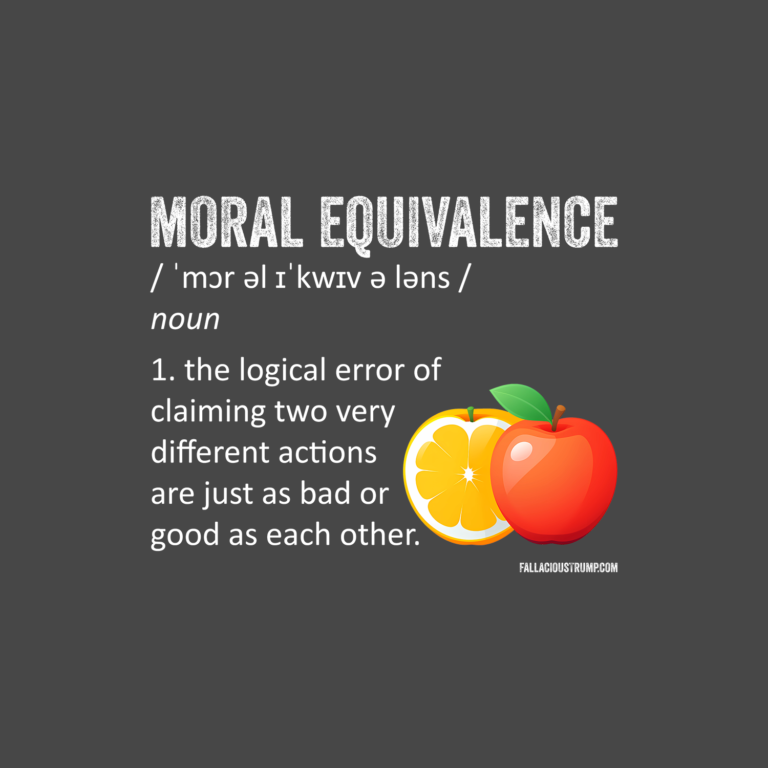
Moral Equivalence (Redux) FT#147
The fallacy of Moral Equivalence is committed when someone argues that because the actions of two people or groups are morally equivalent (whether they are or…
-
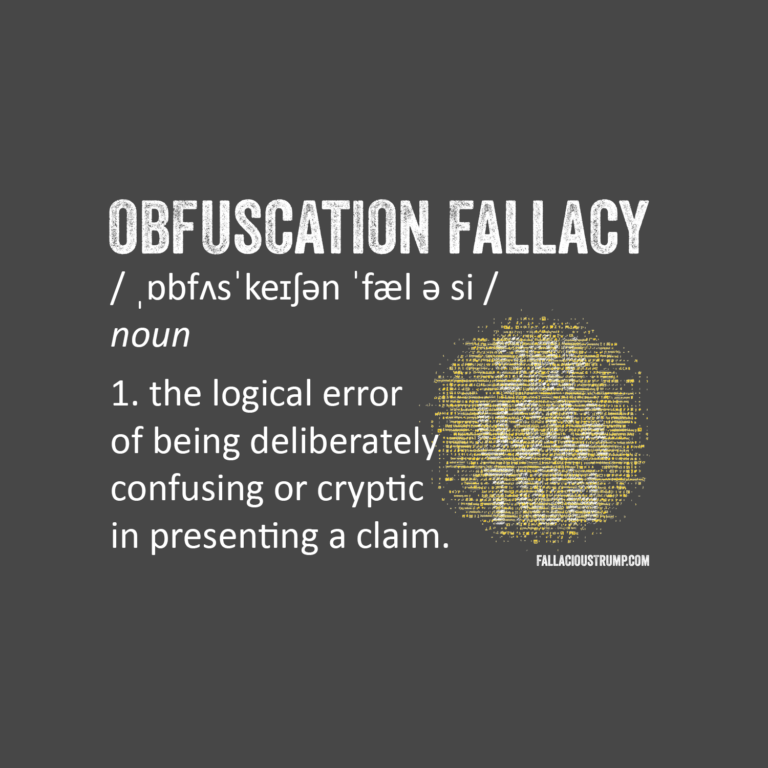
Obfuscation FT#146
Obfuscation occurs when someone provides deliberately vague or confusing information in an attempt to make a claim or present a point of view.
-

Automation Fallacy FT#140
The Automation Fallacy occurs when people are over reliant on technology for decision making.
-

Playing the Victim FT#133
The Playing the Victim fallacy occurs when someone tries to deflect criticism by arguing the target of criticism is just being persecuted, without addressing the content…
-

Argument from Too Much Evidence FT#132
The Argument from Too Much Evidence occurs when someone suggests an imbalance of evidence in one direction is somehow suspicious and therefore proof of the opposite…
-

Countless Counterfeit FT#131
The Countless Counterfeit fallacy is committed when someone suggests a large amount of unreliable evidence, when combined together, can be considered reliable.
-

Genetic Fallacy (Redux) FT#130
The Genetic Fallacy is committed when someone believes or dismisses a claim based on its origins rather than on evidence.
-

Accident Fallacy FT#126
The Accident Fallacy is committed when someone applies a general rule to a specific situation which is actually an exception to the rule.
-
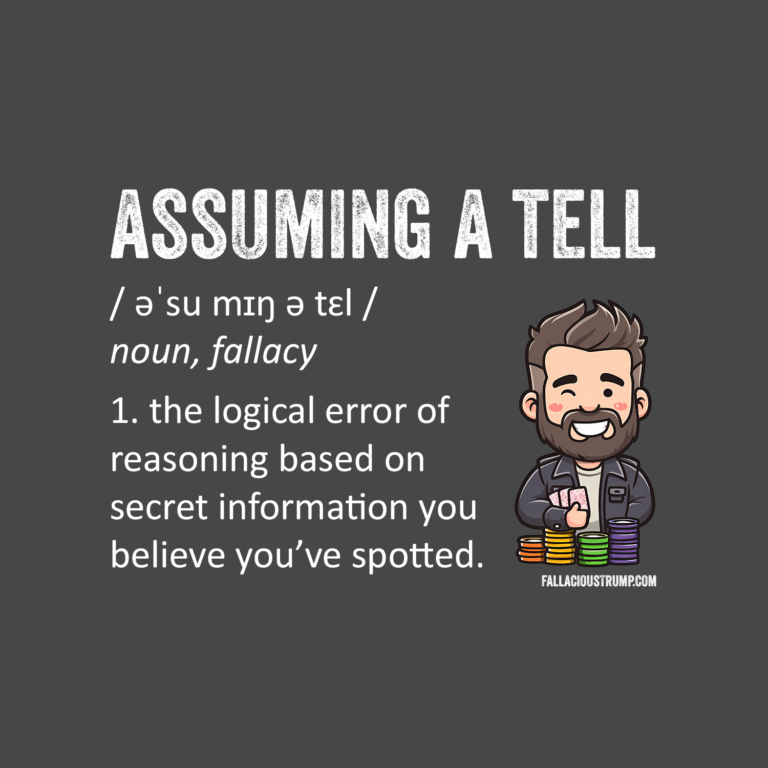
Assuming a Tell FT#121
The Fallacy of Assuming a Tell is committed when someone convinces themselves that they’ve identified a way of spotting secret information and then uses that as…
-

Morton’s Fork FT#119
The Morton’s Fork Fallacy is committed when someone suggests two seemingly different choices actually lead to the same negative result.
-

If By Whiskey FT#117
The If By Whiskey Fallacy is committed when someone either takes such a non-committal stance on an issue that they could be supporting either side, or…
-

Broken Clock Fallacy FT#116
The Broken Clock Fallacy occurs when someone suggests that because they were right once (even if it was for the wrong reason) they should be trusted…
-
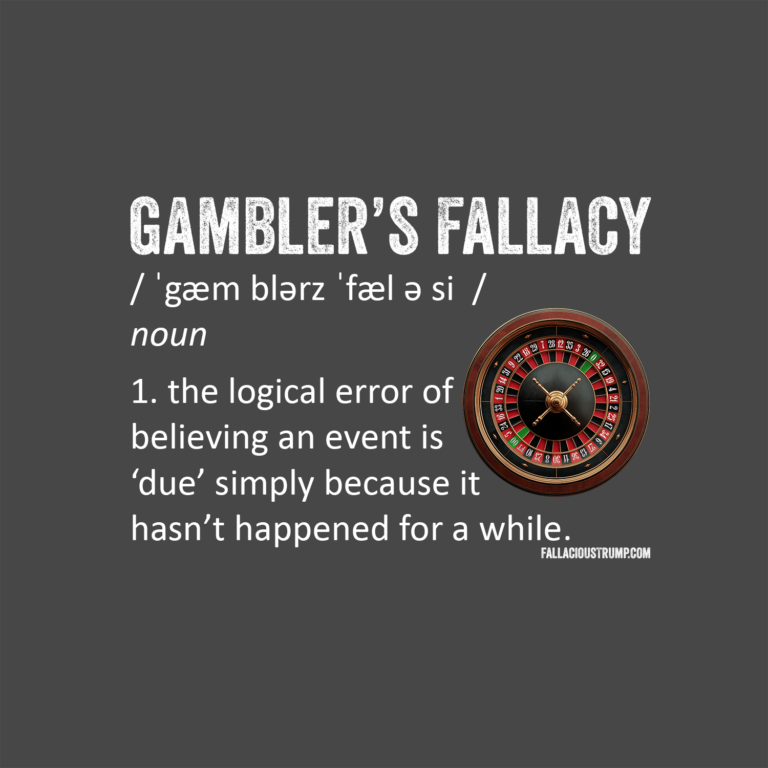
Gambler’s Fallacy FT#111
The Gambler’s Fallacy is committed when someone confuses dependent and independent events or claims that a particular outcome is ‘due’ because it hasn’t happened for some…
-
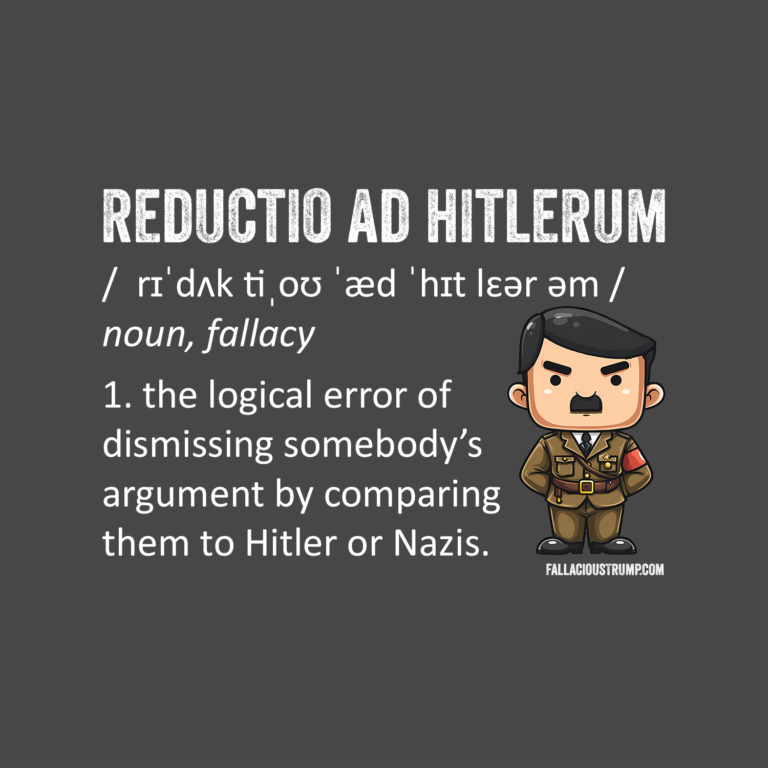
Reductio ad Hitlerum FT#109
Reductio ad Hitlerum is committed when someone compares their opponent to Hitler without due cause, usually in a Herculean avoidance of nuance.
-

Complex Question Fallacy FT#108
The Complex Question Fallacy is committed when someone asks a question which includes the answer they are expecting or only allows people to answer in one…
-

Red Baiting FT#107
The Red Baiting Fallacy is committed when someone calls their opponent a communist or a socialist based on little or no evidence and in order to…
-

Magical Thinking Fallacy FT#105
The Magical Thinking Fallacy is committed when someone claims that a real world outcome is the result of a magical cause or process, such as a…
-

Subverted Support FT#103
The Subverted Support Fallacy is committed when someone tries to describe or explain a phenomenon without first providing any evidence that the phenomenon exists at all.…
-

Argument by Vehemence FT#97
The Argument by Vehemence is committed when someone gets loud, angry or indignant in place of making an actual argument.
-

Reification FT#94
The Reification Fallacy is committed when someone suggests an abstract concept is real and has intent or agency.
-

Incomplete Comparison FT#93
The Incomplete Comparison fallacy is committed when someone suggests a thing is better or worse, without specifying what it is better or worse than.
-
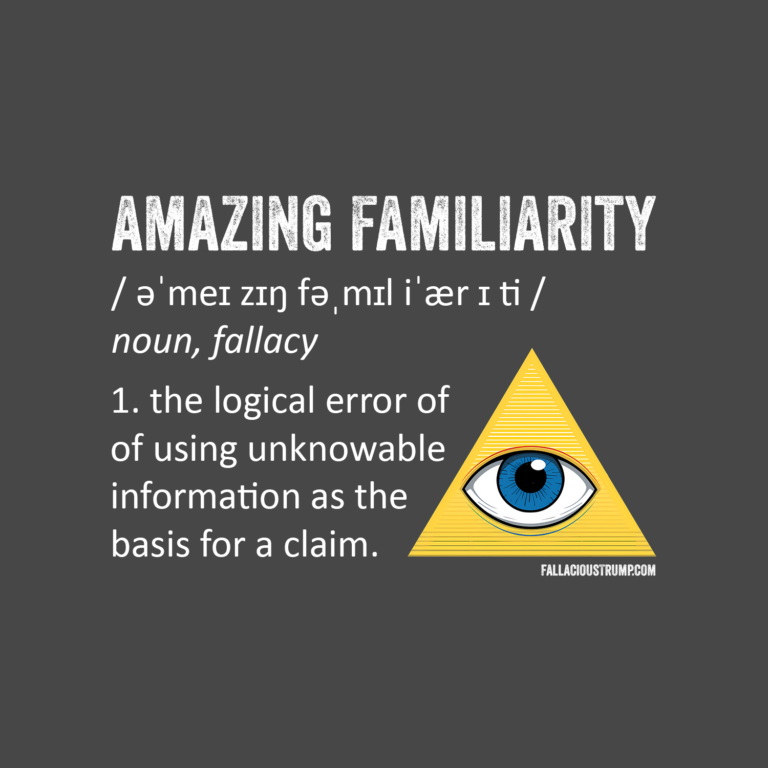
Amazing Familiarity FT#91
The Amazing Familiarity Fallacy is committed when someone makes an argument based on information they couldn’t possibly have, such as what someone else is thinking.
-
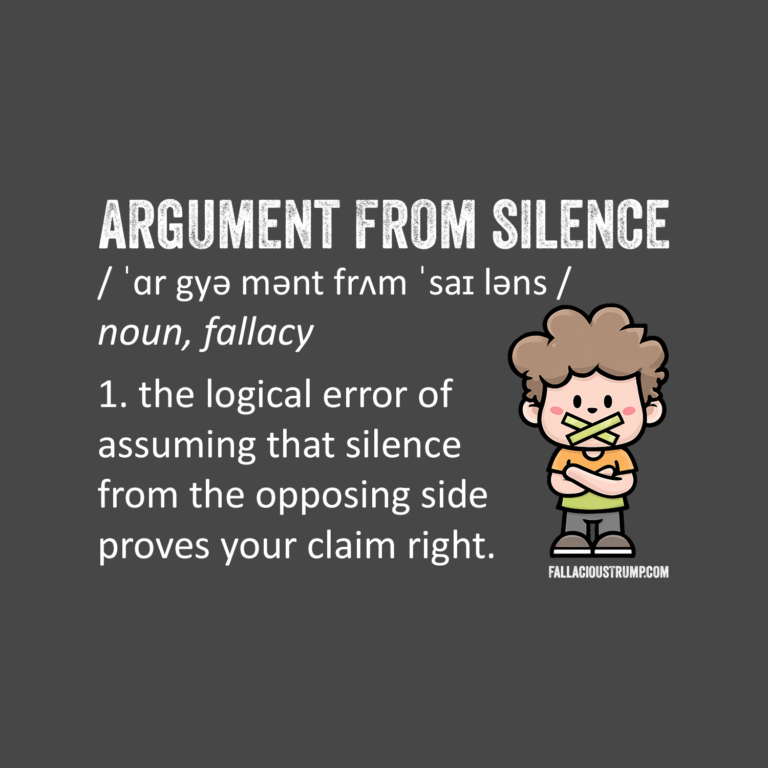
Argument from Silence FT#90
The Argument from Silence Fallacy is committed when someone assumes that no response from their opponent is proof that they are right.
-

Gotcha Argument FT#87
The Gotcha Argument is used by people who are backing into a corner and unable to answer a tough question. So they accuse their opponent of…