Boris Johnson: Logical Fallacies
Every Fallacious Trump episode featuring Boris Johnson, 90 so far. Each one breaks down a logical fallacy with real clips and a plain-English definition. Pick a card to hear the episode.
-

David and Goliath Fallacy FT#203
The David and Goliath Fallacy occurs when someone suggests that the underdog in any dispute is good or right merely because they are the underdog, and…
-

Appeal to Pity FT#199
The Appeal to Pity Fallacy occurs when someone tries to convince others by making them feel sympathetic instead of using evidence.
-

Blinded by AI FT#198
The Blinded by AI Fallacy occurs when someone bases their claim on an unrealistic view of what artificial intelligence is currently capable of reliably achieving.
-

The Courtier’s Reply FT#197
The Courtier’s Reply occurs when someone dismisses their opponent’s opinion by claiming they lack sufficient expertise on the subject to be allowed to opine.
-

Appeal to Definition FT#194
The Appeal to Definition Fallacy occurs when someone relies on a specific definition, from a dictionary or other authority, which supports their argument, and ignores the…
-
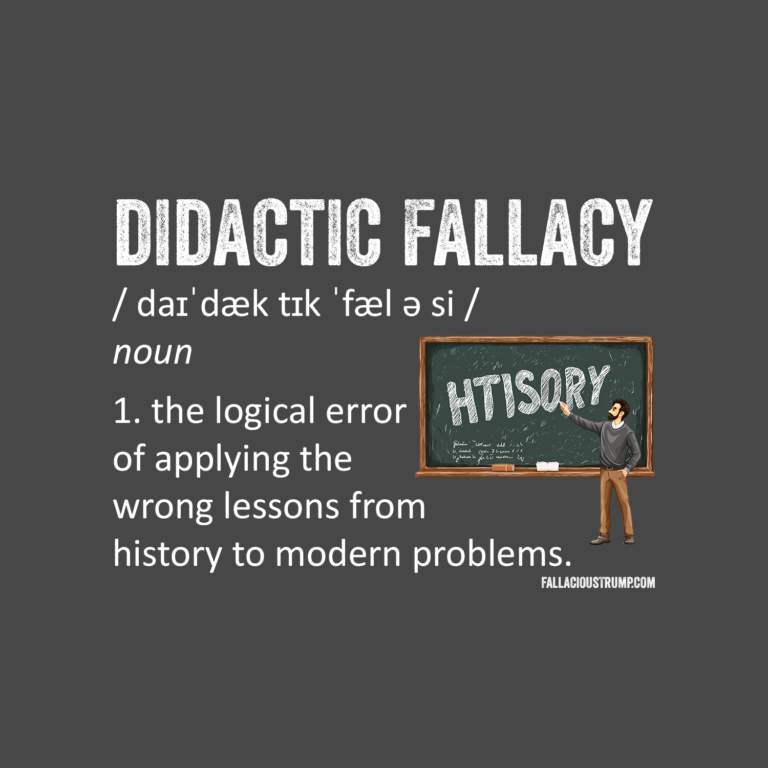
Didactic Fallacy FT#192
The Didactic Fallacy occurs when someone attempts to apply a historical analogy to a current situation but takes the wrong lesson from history or applies it…
-

Chronocentrism FT#185
Chronocentrism occurs when someone assumes a specific time period is inherently better or more important than all others.
-

Ethnocentric Fallacy FT#179
The Ethnocentric Fallacy occurs when someone starts from an assumption that their own culture is superior to others or was more instrumental in history than it…
-

Hypophora FT#173
Hypophora occurs when someone answers their own question without giving anyone else a chance to answer. It can be fallacious if the answer given serves them…
-

Jingoism Fallacy FT#172
The Jingoism Fallacy occurs when someone attempts to appeal to patriotic emotions rather than reason to persuade others.
-

Golden Hammer Fallacy FT#171
The Golden Hammer Fallacy occurs when someone assumes it is sensible to rely on a single tool or method to solve every problem.
-
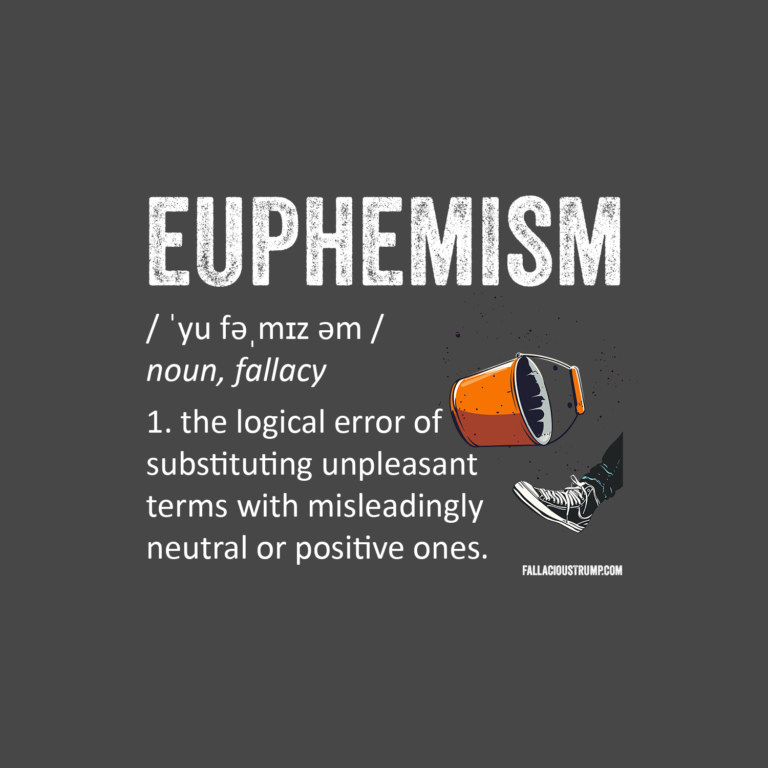
Euphemism FT#168
The Euphemism Fallacy occurs when someone uses a misleadingly positive word or phrase in order to avoid a negative reality.
-

Fault as Virtue FT#166
The Fault as Virtue Fallacy occurs when someone disingenuously reframes a flaw in themselves or a situation as a good thing to support their argument.
-
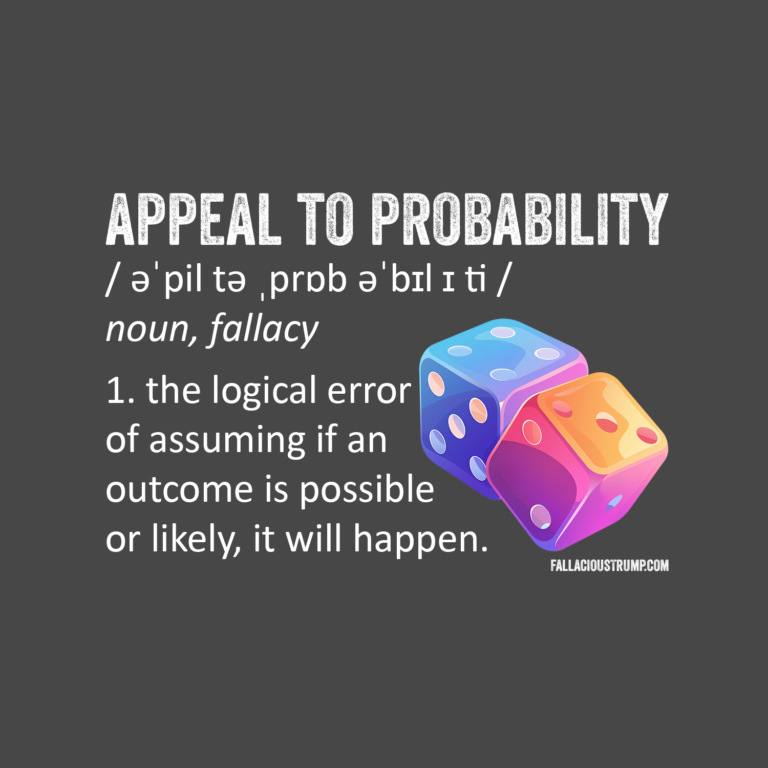
Appeal to Probability FT#163
The Appeal to Probability Fallacy occurs when someone assumes that because something is possible or probable then it will definitely happen.
-

Non Sequitur (Redux) FT#162
The Non Sequitur Fallacy occurs when someone makes a conclusion that does not follow from the premises.
-

Parade of Horribles FT#161
The Fallacy occurs when someone lists lots of unpleasant but theoretical (or made-up) outcomes that they insist would follow from an action.
-

Glittering Generalities FT#160
The Glittering Generalities Fallacy occurs when someone uses vague, emotionally appealing phrases in place of reason.
-

Cum Hoc Ergo Propter Hoc FT#159
Cum Hoc Ergo Propter Hoc occurs when someone assumes or implies a causal relationship because two things happen at the same time.
-

Passing the Buck FT#157
The Passing the Buck Fallacy occurs when someone attempts to avoid responsibility by claiming someone else is to blame for their actions.
-

Two Wrongs Make a Right Fallacy FT#156
The Two Wrongs Make a Right Fallacy occurs when someone tries to justify an action by pointing out that someone else did it too, or would…
-

Appeal to Coincidence FT#151
The Appeal to Coincidence occur when someone claims luck or coincidence is the reason something happened despite evidence of a more likely cause.
-

Contrarian Fallacy FT#150
The Contrarian Fallacy occurs when someone reflexively opposes something without any attempt to offer evidence or counter arguments.
-
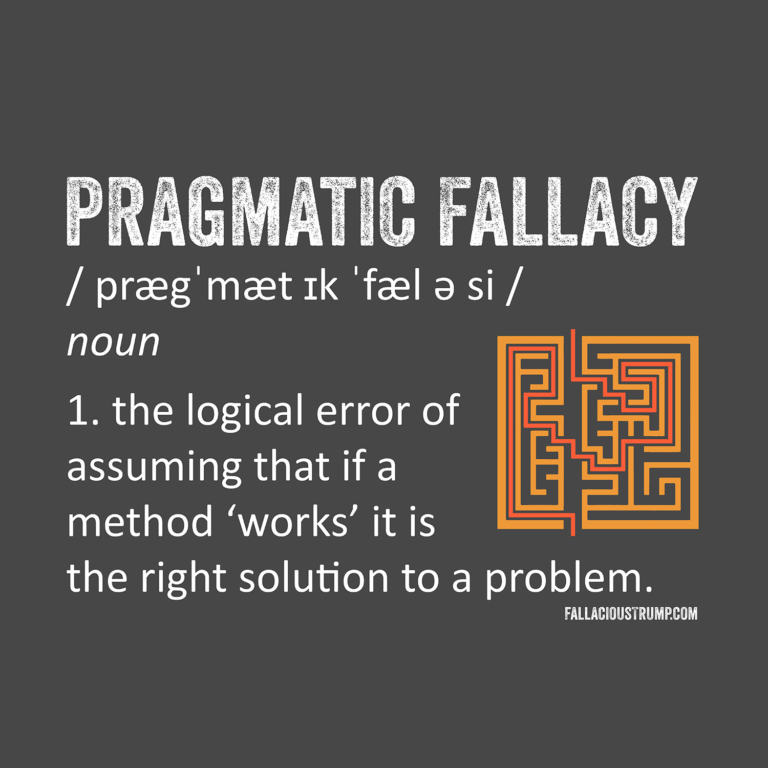
Pragmatic Fallacy FT#149
The Pragmatic Fallacy occurs when someone argues a course of action should be undertaken because it ‘works’, even though it may only work in certain circumstances…
-

Apophasis FT#148
Apophasis occurs when someone raises a subject by claiming they are not going to mention it.