Fallacies
-
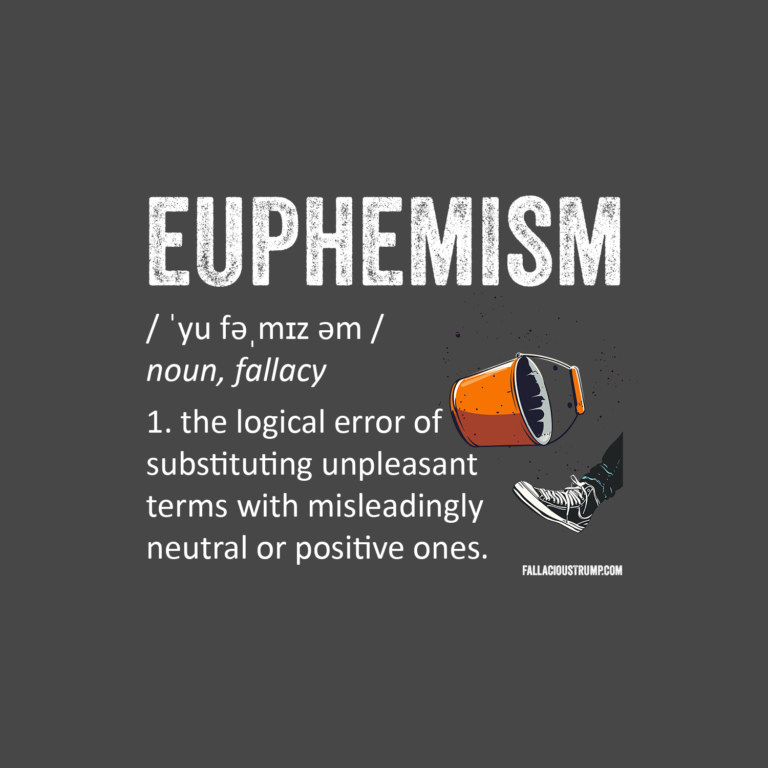
Euphemism FT#168
The Euphemism Fallacy occurs when someone uses a misleadingly positive word or phrase in order to avoid a negative reality.
-

Insignificant Cause FT#167
The Insignificant Cause Fallacy occurs when someone claims an outcome is due to something which may be a minor factor, but is certainly not the main…
-

Fault as Virtue FT#166
The Fault as Virtue Fallacy occurs when someone disingenuously reframes a flaw in themselves or a situation as a good thing to support their argument.
-

Truth Rejection FT#165
Truth Rejection occurs when someone addresses a question by specifically mentioning a particular response they won’t accept – which happens to be the truth.
-

Dysphemism FT#164
The Dysphemism fallacy occurs when someone replaces a neutral term with an unnecessarily negative one to support their position.
-
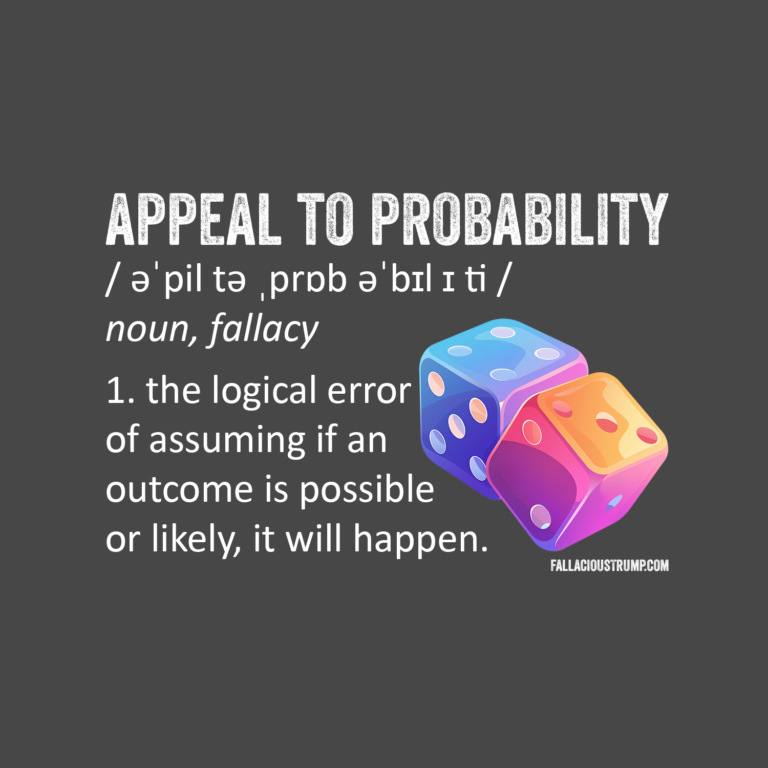
Appeal to Probability FT#163
The Appeal to Probability Fallacy occurs when someone assumes that because something is possible or probable then it will definitely happen.
-

Non Sequitur (Redux) FT#162
The Non Sequitur Fallacy occurs when someone makes a conclusion that does not follow from the premises.
-

Parade of Horribles FT#161
The Fallacy occurs when someone lists lots of unpleasant but theoretical (or made-up) outcomes that they insist would follow from an action.
-

Glittering Generalities FT#160
The Glittering Generalities Fallacy occurs when someone uses vague, emotionally appealing phrases in place of reason.
-

Cum Hoc Ergo Propter Hoc FT#159
Cum Hoc Ergo Propter Hoc occurs when someone assumes or implies a causal relationship because two things happen at the same time.
-

Calling Cards FT#158
The Calling Cards Fallacy occurs when someone dismisses a valid point by accusing their opponent of playing a rhetorical card.
-

Passing the Buck FT#157
The Passing the Buck Fallacy occurs when someone attempts to avoid responsibility by claiming someone else is to blame for their actions.