Show Notes
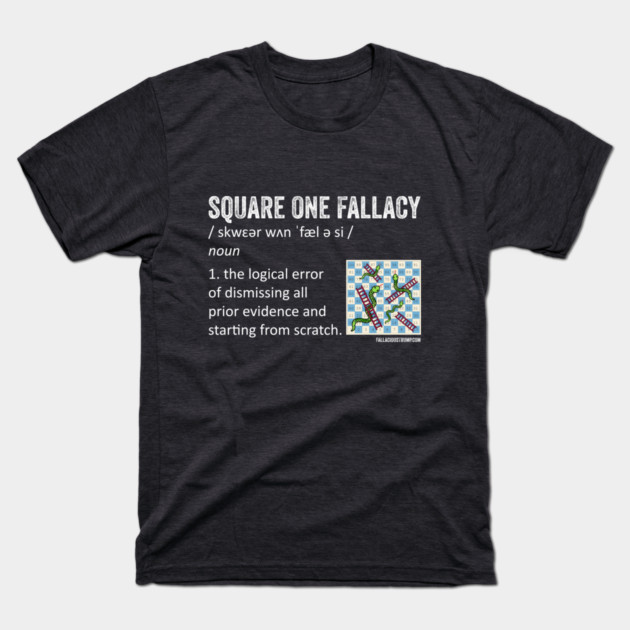
The Square One Fallacy occurs when someone dismisses all the work and research that has been done and pretends we need to start from the beginning to solve or understand a problem.
Trump
We started out by discussing this clip of RFK Jr on vaccines:
Then we talked about this clip of Trump suggesting someone should look into violent video games:
Mark’s British Politics Corner
Mark talked about this clip of Nigel Farage suggesting we need another, even more Brexity, Brexit:
Fallacy in the Wild (Sting: The Scientist – Coldplay)
In the Fallacy in the Wild we looked at this Op Ed about gender affirming care in the New York Times
Then we discussed this news report about legalizing cannabis in Guernsey:
And we finished up with this clip from a Congressional Hearing on tobacco:
Fake News
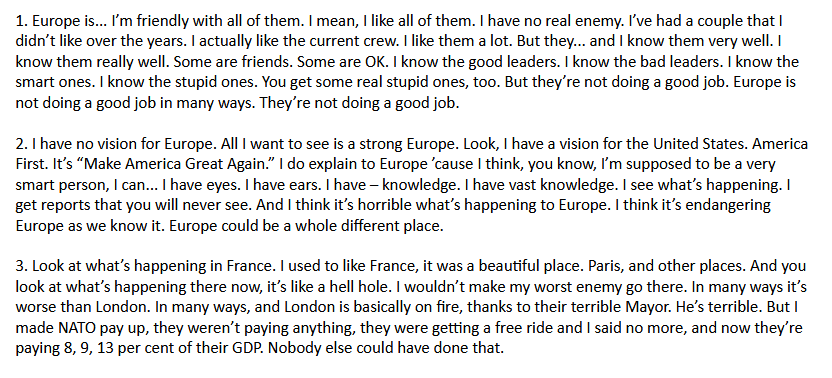
Here are the statements from this week’s Fake News game:
Spoiler
Statement 3 is Fake News. Mark chose number 1Mark got it wrong again this week, and is on 48%!
Video game violence is not a logical fallacy
Jim talked about his recent deep dive into the corpus of media effects research in an attempt to clarify whether violent games cause violence in players.
The stories we really didn’t have time to talk about
- Remember those pipe bombs that were left near each party headquarters on the evening of January 5th, 2020. They were discovered and defused, there was grainy footage of the person who left them, but law enforcement seemingly had no leads. Some people randomly and possibly jokily accused Marjorie Taylor Greene at one point, because she had similar shoes, and last month a reporter on Glenn Beck’s “news” outlet The Blaze (I did scare quote for news, but you didn’t see) accused a female former US Capitol Police Officer by name of being the elusive bomber, based on gait analysis that he claimed made her a 94-98% match for the bomber. Well, either we just hit that 2-6% error margin, or The Blaze isn’t the bastion of responsible journalism we all thought it was, because they caught the guy, and he wasn’t the female Capitol Police Officer. The FBI and DOJ made a big fuss about how they got their man, and then slightly less fuss when it came out that he told authorities he believed the conspiracies that Trump really won the 2020 election. I’ll tell you who else believed the conspiracies, or at least was prepared to pretend he believed the ones he was actively making up – Trump’s new head of the Office of Response and Recovery at FEMA, Gregg Phillips. If that name rings a bell, you’ve probably listened to us talking about Dinesh D’Souza’s movie 2000 Mules at some point. Yes, Gregg is the one who claimed to have the evidence of all the voter fraud, just not the kind of evidence you can see in a movie or release to the public despite claiming you would. Coincidentally, he’s also the one who claimed Trump won the popular vote in 2016 if you don’t count the 3 million votes by illegal immigrants which he definitely had proof of, and would definitely release to the public but never did. The Head of the Office of Response and Recovery is a hugely fucking important job, and putting this lying grifter in charge will literally kill people. He has no experience whatsoever in disaster response, despite claiming on LinkedIn that his “work in disasters and emergencies goes back four decades.” Note he’s not saying whether he fixed or caused those disasters and emergencies. Of course, he said the same thing about voter fraud, and that was bullshit, too. He has held government jobs before – he spent a total of about four years in three different Health and Human Services jobs in Mississippi and Texas, two of which he left under a cloud of accusations of corruption, financial and ethical misconduct, impropriety and erosion of the public trust. That last bit’s a direct quote from the Mississippi Review committee that investigated him. Literally the best case scenario for everyone involved here is that he quickly finds a way to grift millions of dollars, gets bored, and moves on, like he always has before.
- Cos when you are Emperor you of course want everyone to see your face on everything and where better than on those things that you are destroying or removing safeguards from or failing to provide backpay for when you’ve made them all stop working whilst you perpetuate the longest government shutdown in US history and cutting staff by 25%. Imagine Trump’s whining when he hears that the Center for Biological Diversity filed a lawsuit to halt federal plans to decorate next year’s national parks pass with an image of President Donald Trump’s face, arguing that federal law requires the pass to feature the winner of an annual nature photography competition instead. The Trump administration also recently announced it was cutting free admission to national parks on Martin Luther King Jr. Day (Jan. 19 for 2026) and Juneteenth (June 19) — the only two federal holidays honoring Black history. Visitors will instead get in free on June 14, which is both Flag Day and President Donald Trump’s birthday. The standard America the Beautiful pass for 2026 unveiled last month by the Interior Department, features side-by-side portraits of George Washington and Trump to mark the 250th anniversary of America’s founding. Kierán Suckling, the Center for Biological Diversity’s executive director said “The national parks are not a personal branding opportunity. They’re the pride and joy of the American people. America the Beautiful means wild rivers and majestic mountains, not a headshot of a bloated, fragile, attention-seeking ego. There’s nothing beautiful about that.” I guess it’s the equivalent of The National Trust membership card bearing the face of Boris Johnson or Nigel Farage as recent and current pretenders to the ego throne here. Though Nigel has been approached by the Amphibian Society to appear on their membership cards since Kermit the Frog turned them down again. In a statement, the Interior Department, which oversees the National Park Service, said the new free-entry schedule was part of its “commitment to making national parks more accessible, more affordable and more efficient for the American people.” Alan Spears, senior director of cultural resources at the National Parks Conservation Association said “This move is not going to make our national parks safer, more sustainable or more relevant, but it is going to make some people believe that their national parks are no longer interested or open to being relevant and welcoming to them.” Trump of course doesn’t give a fuck, he just wants to insert himself into every walk of American life and be thanked for it, to cover up for doing nothing of any merit, for any tax-paying park-visiting American ever. I hear Punxsutawney Phil will be wearing a red tie and a bad combover toupee next February as well.
- As we know, the only reason Trump and his Secretary of War, boozy white supremacist part time TV host and accused sexual predator Pete Hegseth, are committing war crimes off the coast of Venezuela is to protect Americans from the scourge of the Latin American drug traffickers that kill, by Trump’s reckoning, 25,000 people per recently exploded boat. Well this might shock you, but it’s possible Trump doesn’t really care about the drugs after all. I mean, if he did, why would he pardon ex-Honduran President Juan Orlando Hernandez, who was sentenced last year to 45 years in federal prison for conspiring with drug cartels during his tenure as President as they moved more than 400 tons of cocaine through Honduras toward the United States. In exchange, prosecutors said, Hernández received millions of dollars in bribes that he used to fuel his political rise. Maybe it’s because Hernandez is a rich, corrupt, right-wing authoritarian, and his successor, Xiomara Castro, has spoken out against Trump. Maybe it’s because Trump’s rich friends Peter Thiel and Marc Andreesen are supporters of Hernandez and investors in a Honduran economic zone championed by Hernandez. Or maybe, he doesn’t have a clue what’s going on, signs whatever’s put in front of him and doesn’t give a shit how it looks or who it affects. I think probably that one, but only because it would be irresponsible to speculate on whether anyone bribed Trump for the pardon. Meanwhile, Honduras’s attorney general has issued an arrest warrant for Hernández, and has asked government agencies and global police agency Interpol to arrest him.
- 21 Republican senators in Indiana voted against Trump’s redistricting proposal which would have divided Indianapolis into four pieces, grafting pieces of the city onto other districts to dilute the influence of Democratic voters. Disregarding what the senators’ constituents might have to say about it, some Republicans lashed out at senators for defying Trump. “His life was threatened — and he was nearly assassinated,” Indiana Lieutenant Gov. Micah Beckwith wrote on social media. “All for what? So that Indiana politicians could grow timid.” The night before the vote Trump laid off the nicey-nicey and went all-out tantrumic toddler on the senators accusing the state’s top senator of being “a bad guy, or a very stupid one.” In interviews after Thursday’s vote, several Republican senators said they were leaning against the plan from the start because their constituents didn’t like it and some said they simply didn’t like the president’s tone, like when he called senators “suckers.” Trump didn’t seem to get the message. Asked about the vote, the president once again took aim at Indiana’s top senator, Rodric Bray. “He’ll probably lose his next primary, whenever that is. I hope he does, because he’s done a tremendous disservice.” Sen. Sue Glick, an attorney from La Grange who also opposed redistricting, brushed off Trump’s threat to unseat lawmakers who defied him. “I would think he would have better things to do,” she said. “It would be money better spent electing the individuals he wants to represent his agenda in Congress.” Of course as a permanent three-year-old Trump is incapable of learning or humility or co-operation or compromise so he’s not going to take anything from Mitch Daniels, a former Indiana governor and a Republican’s, straightforward explanation for what happened. “Folks in our state don’t react well to being bullied.” in thus dealing Trump one of the most significant political defeats of his second term Sen. Greg Goode in not voting for the proposal said “I’m confident my vote reflects the will of my constituents.” You see Donnie for people to genuinely love you, you’ve got to show them a bit of love. Kim-Jong Un may be described as the beloved leader but that’s cos people are scared of him, they don’t actually love him. Indiana’s Republicans neither love, nor are scared of, you, you petulant child!
- Trump is really upset that the Nobel Committee didn’t give him the peace prize this year despite stopping eleventy hundred wars including that really bad one between Albania and Aberbaijan, two countries who Karoline Leavitt probably claims have always been at war. If there’s one thing Trump’s better at than peace, it’s putting his name on things, so earlier this month he combined the two, and renamed the US Institute of Peace the Donald J Trump Institute of Peace. I’d like to be outraged, but I have to admit I didn’t even know the US had an Institute of Peace, and I am a bit surprised. It’s like finding out we have an Institute of Not Oppressing Other Countries Peoples and Stealing Their Stuff. We don’t, just for the record, instead, we have the British Museum, where people from other countries can come and look at their stuff, which we’re keeping safe for them, since they obviously weren’t very responsible and just let someone come and take it. Anyway, a day later, Trump got the next best thing to the Nobel Peace Prize, the FIFA Peace Prize. I’m not from sports, so I’m not sure if this is the kind of thing that generally happens, but I have a feeling that it might just be another example of horrifically corrupt rich folk stroking the world’s most fragile ego for some future unspecified monetary or pardon-related benefit. Needless to say, Trump was thrilled, because they gave him a medal, and he likes shiny things. The Qatari royal family are probably kicking themselves now that they know that instead of giving him a $400 million plane they could have just got him a medal off Etsy and had it engraved. Meanwhile, I’m just waiting for KFC to announce their inaugural Biggest Hands Award – I wonder who will win!
- In the world of documentation I think it’s fairly safe to state that the content of the documents, the meaning of the words, and the order they are written in is the most important thing. But no, Secretary of State and bastard son of Mark Ruffalo and Billy Crystal smacked in the face with a snow shovel – Marco Rubio thinks that the actual typeface itself is more important, I suspect it’s because whilst he can see, he can’t actually read. In an echo of the jokey global disdain for Comic Sans the State Department distributed a cable on Tuesday which read “To restore decorum and professionalism to the Department’s written work products and abolish yet another wasteful DEIA program, the Department is returning to Times New Roman as its standard typeface.This formatting standard aligns with the President’s One Voice for America’s Foreign Relations directive, underscoring the Department’s responsibility to present a unified, professional voice in all communications,” Well I guess when your ultimate boss has pretensions to be a Little Caesar why not use Times Roman, and was Calibri – the font put in place by Biden in 2023 for, I dunno, legibility and accessibility reasons, really a DEI decision? Yeah how would it be to make documents a bit more readable and approachable? Pshaw ya woke snowflakes, all that leftie philanthropic Bill Gates’ fault for making Calibri the default font in the Microsoft Office Suite in 2007! What’s wrong with making official documents inaccessible and foreboding, and impossible to read on a monitor and get all distorted in small point sizes? God forbid they hear of the Plain English campaign in government offices in the UK! And is this not just another wasteful anti-DEIA program? It all feels a bit like Trump is trying to outdo Ramses III who re-carved or re-inscribed existing statues or monuments to attribute them to himself. Even the Times itself abandoned Times New Roman – the typeface was designed for ancient outmoded redundant useless metal typesetting, specifically for legibility with bad ink and cheap paper – yeah sounds about right for the whole Trump Rubio State Department!
- Given the stories of some tourists who have been critical of Trump being refused entry to the US, I’ve made peace with the fact that I probably wouldn’t make it into the country until after Trump leaves office in 2029. Or maybe 2033. But just recently, the Visa restrictions the Trump administrations have announced are starting to feel like a personal attack on me. I’m not claiming that the recent plan to vet the past 5 years of social media posts by potential visitors from 42 different countries is targeted at me, that would be insane. Sure, I’m one of the hundreds of millions of people that would definitely rule out, but obviously they think I’m clever enough to somehow get round that rule and give them some of my many conservative sock-puppet social media accounts I’ve been cultivating since 2016 for this exact eventuality, so the State Department have also issued an order demanding enhanced vetting of applicants “to see if they have worked in areas that include activities such as misinformation, disinformation, content moderation, fact-checking, compliance and online safety, among others.” I mean, Jeez, why don’t they just name me. Oh, sure they try to cover it up by claiming it’s about protecting freedom of speech and combatting censorship, but that’s obviously bullshit. Who would believe you’re protecting freedom of speech by refusing freedom of travel to people who have said something you don’t like, or checked a fact you lied about? No, this is obviously retaliation for the work we do here on Fallacious Trump, or the book I wrote about Dinesh D’Souza’s bullshit election rigging film, or the memes I occasionally repost on Threads and Bluesky. Well, I won’t be bowed. I can wait another 1,132 days to visit America again. Or maybe 2,594 days if he runs again.
- 18 months into the Labour government and 18 months away from the above inflation pay rises they gave to the medical nursing sector who they saw as so vitally important to the nation and who had been underprovisioned for so long under the Tories, Health Secretary and Mr Potato Head too long in the microwave Wes Streeting declares war on Doctors seeking more pay in line with their nursing colleagues. In language resonant of Thatcher, Cameron and Johnson; Starmer says a fair deal is on the table and Streeting says ooh but what about the ‘flu, going on strike will put patients at risk. Using the language of the Tory party that wanted to privatise the NHS looks to me to be every bit as risky. To help health matters Badenoch’s Tories would lift the 2030 ban on manufacturing petrol and diesel cars and do away with the legislation forcing manufacturers to make electric vehicles. We may all end up wheezing in a fossil-fueled climate inferno but at least we might vote Tory rather than Reform eh Kemi? Starmer, leafing through Farage’s playbook, is urging Europe’s leaders to curb ECHR to halt the rise of the far right. In a twisted logic he wants to water down the legislation protecting asylum seekers and refugees so countries can take tougher action to protect their borders and thus see off the rise of the Populist Far Right across the continent – you know exactly the thing that the far right populists say they want to do? Meanwhile a man in Bristol fell to his death from a ladder whilst attempting to hang a Union Flag on a lamppost. Whilst not quite to Charlie Kirk excesses, the man is being lauded in the local press as a keen football fan, loving father etc etc and not called out for ignorant racist servitude to Frog-Faced Farage’s shit-stirring. A bit like when Sir Oswald Mosely, Baronet, MP, founder of the blackshirts shit-stirrinig neo-nazi racist movement, died and was lauded as a fine upstanding member of the aristocracy! Fucking hell this country sometimes!!!
You can now buy Jim’s book, 2000 Mules and One Big Lie: A Stubborn Conspiracy Theory, and you can buy all our t-shirts, mugs, hats and more at our TeePublic Store, including this week’s fallacy:
That’s almost all for this week, but here’s our AI-aided transcript, which is quite accurate, but not totally:
Square One Fallacy – FT#187 Transcript
Read the full transcript
00:23 Jim: Hello and welcome to Fallacious Trump, the podcast where we use the insane ramblings of needy Armin to explain logical fallacies. I'm your host, Jim.
00:31 Mark: And I'm your other host, Mark. A logical fallacy is an error in reasoning that results in bad or invalid arguments, and the logical fallacy we're looking at this week is the square one fallacy, because we're at episode 187, which means it's multiple
00:44 Jim: of 11, right, yeah, we do um new fallacies and, like last time, this one isn't one that we've coined ourselves, right? This is one that was made up slash named by jonathan jerry, who we interviewed, I guess 11 episodes ago now, when we talked about appeal to outdated data, which was also coined by jonathan, and he mentioned at the time that this was another thing that he'd also noticed was a new thing. So it's a new fallacy, but it's not one of ours and it's it's kind of. You won't find it on the main on the lists that you'll find, although I have seen it is starting to get a bit of traction. I don't I haven't seen people using it for other stuff yet, but I have seen a few people referring to jonathan's article. So what it is basically is when people pretend that there hasn't been any meaningful research or movement towards solving a problem and we need to start from scratch. Basically, if they say what we need to do, we need someone who should look into this, when it's actually something that's been looked into a lot. Yeah, and part of what made him say that was rfk's reaction to vaccines and, um, some of his, his allies, also saying things like: why don't you want them to do any research into this? You know what are you afraid they'll find? They're only saying: let's find out if they're safe. Why are you against that? And, of course, the The reason you're against it is because that research has already been massively done. And here's RFK Jr. on Fox & Friends in 2023, before he became the head of health in the US.
02:22 Clip: RFK Jr on vaccines
— I'm not against vaccines. I've never been anti-vax. That's something that's said about me to make me look crazy, like a conspiracy theorist. What I've said is let's have testing for each of the vaccines to make sure that they're safe and effective. Effective vaccines are the only medical product that is not safety tested prior to licensure, and we need placebo controlled trials where you know you have a placebo group and a vaccine group and then let's look at the health five years later and make sure they're healthy, and that's all I want.
02:57 Jim: So that's obviously not true, yeah, yeah,
03:00 Mark: I'm not a conspiracy theorist, but yeah, but here's a a conspiracy.
03:04 Jim: Yeah, that wow, is that? Of course, it isn't true that vaccines aren't tested medical.
03:09 Mark: Yeah, that would be mad testing.
03:12 Jim: Yeah, new vaccines are tested in placebo -controlled trials. That's how they do it. Yeah, but where there's a kernel of truth to this – but it isn't exclusive to vaccines by any means – is that when we already have a working vaccine, yeah, new vaccines, novel vaccines, vaccines aren't tested against a placebo, because when you have something you know works and you're testing a new thing, it would be massively unethical to leave someone unvaccinated by giving them a placebo when you're testing a new one. So what they do is they test it against the existing vaccine that they know the safety and efficacy of. And if it's better than that, they switch it out and start using the new one. And if it's not as good, they keep using the old one.
03:58 Mark: That makes perfect sense.
04:00 Jim: That's true of other medicines as well. When we have a treatment for something and a new treatment comes along, they don't necessarily test it against placebo, because leaving people untreated might be, depending on what it is you're treating them for, really unethical. Yeah, so they don't do that. It's only when we have a new treatment that we're not sure if it's. You know there isn't already a treatment or something. Yeah, then it's tested against, So it's not exclusive to vaccines. It's not true that they're not tested. And it's not true that placebo testing is the best way to do that. All vaccines are tested.
04:34 Mark: It just. It just comes from malevolent ignorance. Yeah, it's not. You know, I'm not against them, I just think they should be tested. Well, they are. Yeah, you know, if you actually were a qualified person to be in charge of the health department, then you would bone up on that stuff rather than just bandy around conspiracy theories under the guise of saying I'm not a conspiracy theorist. Yeah, and And then just some of my best friends as conspiracy theorists.
05:05 Jim: Ignorance is definitely one of the reasons that this happens. One of the other reasons is because the testing, the extensive testing or research or whatever that has been done, hasn't yielded the answer you want. And so you want more testing, more research, until you get the answer you want.
05:24 Mark: So that's where the malevolence comes in. Because if the answer you want is to shore up your conspiracy theory or to shore up your distrust of Big Pharma, or whatever it is.
05:35 Jim: Or just your preconceived idea of what result there will be from a particular trial of something. This also, I think, can be attributed to when it's not necessarily research that needs to be done, but some movement needs to be made towards a solution of something, solving a problem, and you're claiming that this problem needs solving by this method, when actually people are already working to solve this problem or at least doing stuff that you're saying we need to start with. And this example is from Trump after one of the school shootings. I believe this was Stoneman Douglas, and he was talking about violent media.
06:15 Clip: Trump suggesting someone should look into violent video games
— We have to look at the internet because a lot of bad things are happening to young kids and young minds and their minds are being formed. And we have to do something about maybe what they're seeing and how they're seeing it. and also video games. I'm hearing more and more people say the level of violence on video games is really shaping young people's thoughts. And then you go the further step and that's the movies. You see these movies. They're so violent and yet a kid is able to see the movie if sex isn't involved, but killing is involved and maybe they have to put a rating system for that.
06:52 Jim: There's already a rating system. For that, yeah. There has been for quite a long time. There's a rating system for movies and for games, yeah, so suggesting that that's a way to possibly solve this problem is, in my opinion, this, this fallacy. It's a square one fallacy, because he's saying: well, maybe we should think about putting a rating system in place, yeah, yeah, that's been done. Hasn't solved the problem, but it's, it's the bit that you think might be effective. Of course, there's also the issue of the fact that there's been quite a significant amount of testing on what extent violent media has to play in mass shootings and in violence. That's a topic that I will be talking about at length later on in the episode, so I will leave that there. Cool.
07:38 Mark: But also it kind of cherry picks the media because he is a contributor to violent media.
07:44 Jim: Oh, absolutely, yeah, no, it's scapegoating the media in this instance, absolutely.
07:49 [Sting: Mark's British Politics Corner] And now is the time, I think, for Mark's British Politics Corner.
07:53 Mark: In a similar medical vein, quite recently, on the 25th of November, Kemi Badnok has jumped yet again on the trans -culture war bandwagon and tweeted: on the 25th of November: No child is born in the wrong body. I cannot believe we are back to square one with NHS England backing an experimental trial of puberty blockers on healthy, vulnerable children, ignoring the damage already done. And then she kind of includes the letter that she's written to whoever to get people to get West Streeting to step in. So ignoring the damage already done. The Cass report, which was commissioned by the Tory party, recommended that puberty blockers be made temporarily unavailable, except if the child gets the puberty blockers through a research study designed to learn more about puberty blockers. But Kemi Bannock…
08:53 Jim: Yeah, the Cass report specifically said research should be done on this, which already was the back -to -square -one thing, because plenty of research has already been done on the effectiveness and safety of beauty blockers.
09:04 Mark: And I think part of the acceptance when she was Equalities Minister and before she was Conservative leader, she welcomed the Cass review and its findings and I suspect that was because that allowed them to put their policy in, which was to be all anti -trans and but be on that side of the culture wars, and by wholeheartedly supporting the review and the cast report that would kick the can down the road a little and they wouldn't have to deal with it. So that's why they embraced it and now she's doing again, because the recommendations were, yes, we should give puberty blockers to people as part of the testing process and she kind of went yeah, at the time. That was great and the Tory party accepted all the recommendations in full. And the thing is it wasn't it wasn't a negotiated compromise with trans advocacy groups. It was a requirement imposed by anti -trans people like the then Tory party thinking um, prior to her becoming the leader and while she was the the equalities minister. It's kind of proper 1984 mistitling, because she wasn't about equality at all. They had a lot of worries about getting votes, basically. So they just jumped on that wagon and it was suggested by the anti -trans community and so there's a bit of, I think, in a in a square one thing, there's also a bit of moving goal posts – they're the ones that suggested it – and then when, When the requirement is met, there's a kind of oh well, we can't believe that's happening.
10:46 Jim: Yeah, I think Kemi's certainly stacking goalposts, moving on top of the original square one. She's moving the goalposts to square one.
10:56 Mark: So here's our second example. This is Rishi Sunak speaking to the faithful in surprisingly shiny trousers in January. Him, not the faithful. In January 2024, not long after the general election was announced.
11:10 Clip: British politics
— Now the choice facing our country at that election is: do we stick with the plan that is starting to deliver the long -term change that our country needs, or do we go back to square one? I want to deliver the Peace of mind to all of you that will come from knowing that we are building a brighter future for your children and grandchildren. Children, and I want to deliver a renewed sense of pride in our country now. The alternative is keir Starmer, who would just take us back to square one.
11:48 Mark: It doesn't define what square one is, but the more you listen to it, the more distant and opaque and indistinct the promises are. Do we stick with the plan? That is big. We're beginning to see the delivery of the long term, so I think, Well, that's a long way off. We're beginning to see the leading edge of something that's a way, way off. And also, squares 2 to 14 under the Tories, not particularly good. You know, it would be nice to just go back to square 2015. That would be good.
12:26 Jim: I'm going to push back on this one a bit, which I haven't done for a while, actually. But I'm not convinced this is a square. Well, this is him. He mentions square one. He says we don't want to go back there. He's not suggesting that we need to do something that has already been done plenty, that is already being done, is he, really? He's not saying this is something that someone should do something about. As if no one has ever done anything about it. That's really the key to this fallacy, I think.
12:59 Mark: Unless he's doing the reverse of that by saying we need to keep doing this because that's a different. They will.
13:04 Jim: That's more like a sunk cost thing in a way, isn't it? Yeah, we're down this road. We know we don't want to have to start all over again. We've done this amount of stuff, so let's keep going. I mean, I think part of this again, this is, like you know, new fantasy. There isn't a lot of stuff to read about it, but my understanding of it, part of it – is that the ignoring or the dismissal of the work that has already been done – yeah, pretending it isn't valuable or even exists.
13:33 Mark: Yes, so during this election process, this was where he had made that statement. We ought to – you know, star will just take it back to square one – and then cancelled hs2 – the northern branch of hs2, which seems to be actually doing a going back to square – because he was saying: oh, yeah, no, we don't need that. We should look into whether it's whether it's needed. Did he say that or am I just? I don't know.
14:00 Jim: He may have said that. If he said that, I would agree that someone should do some kind of feasibility study on this. Yes, yes, whilst we're
14:09 Mark: so, let's can the fact that they're doing it and then do that, yeah, yeah, I don't know that he was as as blatant as that, because I think that would be very difficult to sustain in saying Starmer would take you back to square one by just taking us back to square one, thatly, all right then. Well, let's try this, This one for size. So here's Nigel Farage. There are two contained in here, I think. So this is him. He's saying controlling our borders. Controlling our borders is only possible to deal with immigration outside of the EU. And Brexit gave us that, allegedly, but it's still not enough. So we're back to square one. We now need to leave the ECHR. So here he is in March 2018 as the leader of UKIP at his manifesto launch during the withdrawal agreement era. and then, after a brief pause, back to square one in October 2025.
15:00 Clip: Nigel Farage suggesting we need another, even more Brexity, Brexit
— We want our country back. And then, and only then, can we actually control our borders. Because the great truth of this immigration debate is that only by leaving the EU can we control immigration into this country. Something, of course, that is, again, only possible outside membership of the European Union. We are not sovereign, Reverend, all the while we are part of the ECHR, the European Council and its associated court. I do not believe that it is right that we should, when it comes to controlling our borders, when it comes to who should be able legally to live, work and settle in this country, or indeed who should not be allowed to stay in our country, for this to be under the remit, firstly, of judges in Strasbourg And, secondly, under the political control of judges in this country, who now can make their own interpretation of what we've understood for many, many years to be British common law.
16:05 Mark: So I think there are two-ish square ones in here. So one is we've got to go back and do Brexit again. All of that stuff that Brexit, that he advocated for Brexit, it's no good. We've got to go back and now we've got to get out of the ECHR, the European Convention of Human Rights. And he's using the European boogeyman to create a quest to bring down the evil bureaucrats. So we have to start all over again. The other square one is the European Convention of Human Rights itself. He wants to tear that up and say it's something that means we continue to be ruled by Europe. and it means that judges can use their judgment in a political way. So he's advocating the tearing up of the European Convention of Human Rights. Even though we wrote most of it. Even though we wrote most of it, yeah, in collaboration with 100 MPs from across Europe. And the UK was the first to ratify it in 1951. He's also advocating the tearing down of the independence of the judiciary. Judiciary. He's characterizing the decisions that they make independently, based on the European Convention of Human Rights, as being politically motivated. Of course, what he's doing is calling it that because he's politically motivated, so that he's saying we should – well, we should not have that. And he's saying we should go back to, uh, what we had before.
17:29 Jim: Right, so I'm gonna what I'm gonna do. I'll give you one of those, yeah, yeah. I think it's actually quite an interesting version of it in as much as saying the only way we can be sovereign is with Brexit. And then, having achieved that, yeah, then being the person like normally – I think this would be applied to other people – having done work and you're ignoring that work. He's ignoring his own work, yeah, yeah, that led to Brexit – and saying all the work that he claimed, yeah. And now he's saying the only way to be sovereign is to leave the European court of Human Rights. Yeah, ignoring the work he's done to get us out of Europe in the first place. That was supposed to achieve that end.
18:10 Mark: So actually we've got to do more of that. We've got to do more Brexiting.
18:14 Jim: I think that he's saying: someone should help make us sovereign by doing this thing I'm now saying is the only way that we can be sovereign, despite the thing I said before.
18:23 Jim: The other bit where he's saying we should get rid of the Court of Human Rights because it is getting in my way of oppressing people's Human Rights. I don't think it's a fallacy at all. People saying We should go back to the way things were. We should go back to square one. Or saying we don't want to go back to square one. Those are just opinions. Nothing illogical about them. They might be wrong. But him saying this thing that we've had for 75 years is a bad thing and we should get rid of it. Yeah, he's just an idiot. He's not making an invalid argument.
18:55 Mark: He's just being an idiot. But interestingly, Starmer is advocating that we look into the European Convention of Human Rights. Somebody ought to look into that to see if it's truly reflecting what we want. And it can't be talked about in a really weird way. Because it's been looked into a little bit.
19:10 [Unclear]: Yeah. Yeah. Yeah. That's right. Yeah.
19:13 Jim: I thought you were going to talk about, you'd mentioned this before, the grooming gangs thing.
19:18 Mark: It was just too… Depressing? That's the very word. It was a mental health drain. But that, but it's also…
19:29 Jim: Briefly summarise.
19:30 Mark: Yeah, briefly summarise. So there was a review that was commissioned again by the Tory party to look into child sexual abuse, I think primarily in Rotherham. So it was about grooming gangs and trafficking of children.
19:45 Jim: And the inquiry came to conclusions and made certain suggestions, didn't it? made like 20 suggestions of things that you can actually do to alleviate the issues that they found.
19:57 Mark: And that was presented to the Tories that did nothing about it. And Kemi Badnok was the Children's Minister, I think at the time and is calling for: yeah, we should have some sort of inquiry into the grooming gangs. Well, there has been one, and there were all these recommendations, and you didn't put any of them in place. And Starmer said to her, you've been in the party for eight and a half years. The report was being undertaken for seven of those. At what point did you not think that you ought to be doing something about them? And then in her response, she did say, well, we accepted 18 out of the 20 recommendations. You didn't do anything fucking
20:41 Jim: about it, though, did you?
20:43 Mark: Accepting them is not doing anything about them. And in fact, the author of the report herself said: we don't need another report, you just need to Act on the recommendation. That will sort the problem out absolutely.
20:56 Jim: And in fact, just last week, on the 9th of december, they appointed baroness anne longfield tbe as the chair of a new independent inquiry into grooming banks.
21:06 Mark: Because their cherry picking goalpost moving goes back to the where well, you can go back to square one in order to avoid the responsibility for having done anything about the previous set of information. And that's exactly what Kerry Badenock is going. Yeah, yeah, we should all have that and we should get somebody in and blah, blah, blah, because it didn't deal specifically with grooming gangs in Telford or somewhere like that. Numbers
21:53 Clip: Nigel Farage (continued)
— of migrants, pulling us apart.
21:59 Mark: Quote: pseudoscience, the science of fascists. Do not speak as if from my heart. But tell me about Brexit. It's come back to haunt you.
22:21 [Sting: Fallacy in the Wild (The Scientist)]
23:28 Mark: Coldplay there, of course, with The Scientist.
23:31 Jim: So in The Fallacy in the Wild, we like to talk about The Fallacy of the Week from a non -political perspective, but that's literally not possible this time.
23:38 Jim: Because I looked for a while for examples of this in popular culture, in movies and TV and stuff. And I couldn't find any good examples at all. And I think the reason is because it requires there to already be a body of evidence in a particular field and then for someone to suggest that you study stuff in that particular field as if that body of evidence doesn't exist. And so having a kind of in -universe body of evidence that exists, that a character in -universe is ignoring, is a very specific narrative structure.
24:13 Mark: It sounds like the kind of thing Monty Burns would say.
24:16 [Unclear]: Yeah, yeah. Would say.
24:17 Jim: Yeah, but I couldn't. So basically, these are all essentially real world examples that are to some extent political, because ignoring research in a particular field so you can continue to spout your mostly hateful talking points tends to be a political thing that people do. The first one is an op-ed in the New York Times from 2015 from a doctor, a psychiatrist called Richard A. Friedman called how changeable is gender, and he is basically questioning the value of gender, affirming care for trans people until we have better data on it and saying we should hold off. We should. We need more information, and he does it by lying about the data that we already have. In part, he relies on a swedish study that was a long -term study looking at the like, following up people who had gone through gender reassignment surgery, specifically in this case, and one of the things they looked at was the levels of depression and suicide pre and post that procedure. The control group for that study was notably not trans people who hadn't gone through gender reassignment surgery. It was cis people. And when you compare trans people pre or post operative to cis people, they have higher rates of depression and suicide because of the fucked up way that society treats trans people, or at least, yeah, in large part because of that. I don't want to say it's a hundred percent because of that, but it's a fucking big chunk of that, yeah. So comparing them to cis people and then saying, clearly, treating them with this surgery doesn't work because they're still depressed about it, right?
26:05 Mark: So they didn't just choose people that were not depressed and suicidal?
26:10 Jim: Well, no, they looked at what the levels are in that the group that they looked at. They looked at how many of them experienced depression and suicidal ideation and and things like that. But then they compared that to the non -trans population – cis people – and they weren't making the point that there's this big difference between those groups, right? They just didn't control it in the way that it would have been useful. If what you wanted to know was right: is this surgery effective for reducing that instance? Like, yeah, are people who are, like you know, similar age, similar time, having gone through social transition, similar time, having kind of come out to their friends and family and all that kind of stuff, but haven't gone through the surgery, do they still experience the same level of suicide and suicidal ideation, depression, etc, et cetera, to people who have gone through the surgery and so on? That would have been an interesting study. It wasn't the study they did. But it's the study that this guy is complaining about. He's not complaining. He's simply saying that it doesn't look like it makes you happier to have gender reassignment surgery, which isn't what they said.
27:18 Mark: Which isn't the conclusion that you can draw from that study.
27:20 Jim: Yeah, the study in fact included the caveat: no inferences can be drawn as to the effectiveness of sex reassignment as a treatment for transsexualism. They said. It's a direct quote. And the researchers admit that the condition of the trans subjects in their study might well have been worse without surgical intervention. It's just not one of the things they covered in that study.
27:41 Mark: Which sounds like a Muller-esque kind of conclusion, doesn't it? You can choose to read it however you want to, and he's chosen to read it not in the way that they intended.
27:51 Jim: Yeah, so what he does is he represents that study essentially as kind of the best evidence in favour of doing surgery on trans people. And therefore, because that really didn't seem to do a great deal, we need more data, we need better data. Towards the end of his op -ed he says there's obviously a huge gap between rapidly shifting cultural attitudes about gender identity and our scientific understanding of them. Until we have better data, what's wrong with a little scepticism? After all, medical and psychological treatments should be driven by the best available scientific evidence, not political pressure or cherished beliefs. So he's ignoring the fact that we have a lot of data that isn't that study. A lot of data that says that, um, not giving gender affirming care to trans people is actively harmful and kills people. Yeah, um, and so that's what's wrong with a little skepticism and requiring better data in inverted commas?
28:47 Mark: Yes, exactly, it allows you a bit like the, the grooming gangs, and a bit like Kemi Badnok's puberty blockers: it allows you to kick the can down the road. It allows you to maintain your bigoted view and back it up with pseudoscience or pseudo -back it up with science and not do anything about it and not give a shit for the consequences, because those are people outside of your purview, because you're just dismissing the whole deal so you can feel good about doing that. Meanwhile, countless dozens of people suffer. Why can't everybody just be nice to one another?
29:28 Jim: So our second example comes from a news report about the attempt to get legalisation of cannabis in Guernsey, the British Channel Island.
29:38 Clip: A news report about legalising cannabis in Guernsey
— In July, moves to decriminalise cannabis were defeated. Some politicians argued it would have allowed the police to focus on more important issues like domestic abuse. Abuse. Others wanted more research into the long -term effects.
— What effect is it that going to have the people on, the people who take it in the future? You know, will they end up with bobbling idiots or will they be okay?
30:00 Jim: You know, and that's a balance, you've got to find the mock concern of people who claim that the the thing standing in the way of legalizing cannabis is a lack of research. Research is, yeah, consistent and fucking ridiculous. Yeah, there is so much research on the effects of cannabis and and it is increasing year on year. In 2020, it hit a record of over 3 500 papers published um on the safety of cannabis or involving cannabis as a kind of you, you know, testing how it is. And then in 2021, more than 3 ,800. In the first 11 months of 2021, more than 4 ,000, basically consistently a year for the last four years. On research into cannabis. There is an enormous amount of research into it and not a single person who is against legalising it is genuinely, intellectually, honestly, waiting for the good research to come along.
31:01 Mark: You can't genuinely and intellectually rigorously be waiting for the right kind of research. Because they just want the piece of research that backs up their current position, which is – I mean, when I heard him say that I was thinking people have been smoking this stuff at least since the 60s. In popular culture. We know about that. Possibly longer.
31:26 Mark: But we know all about that.
31:30 Jim: Longer than a human lifespan, certainly.
31:34 Mark: People have been using the stuff, and we know that. They don't turn out to be bebbling idiots. And you think, what is the motive? The motivation is back to willful and malevolent ignorance. It's, I don't want that to happen. I don't know why. I just don't.
31:51 Jim: It's also, to varying extents, depending on the drug, about racism. It's an easy way to target minority groups because you can charge them with crimes and you can selectively charge people depending on if you like them or not.
32:07 Jim: So I'll tell you another thing that has been tested a lot and has been shown to be bad is tobacco. This is an article from the Greenwood, South Carolina Index Journal from September 23rd, 1963. The headline is, Let's have more research, less theories, Alan says. This is George Allen, the president of the Tobacco Institute. Yeah, weirdly. He said there is some danger of losing sight of what ought to be the basic objective of all concern: to expedite the research still necessary to find out what actually causes the diseases in question and what role, if any, tobacco may play.
32:48 Jim: So by 1963, scientists were very sure that smoking caused lung cancer. The tobacco industry was funding all the research they could to prove that it was indeterminate or there might be other causes, or it was just statistical noise, or it was kind of computer models when those came along to say that there was actually nothing to it. And they kept that going longer than you might expect possible, to the extent that here is William Campbell, the CEO of Philip Morris in 1994, being questioned by Representative Waxman, a Democratic congressperson. Mr.
33:32 Clip: A Congressional hearing on tobacco
— Campbell, you were also deposed and you said, quote, to my knowledge, it has not been proven that cigarette smoking causes cancer. This is a rather passive and puzzling approach, especially in light of the consensus, not by some, but all of the scientific community. Will you ever be convinced? And what evidence are you waiting for? And let's have the microphone passed over. Yes,
— I may be convinced. Uh, we don't know what causes cancer in general right now. So, uh, I I think that we may find out what causes cancer and we may find out some relationship with which has yet to be proven.
34:13 Jim: Wow, 1994, wow.
34:17 Mark: So they were still the previous one where they said: let's have a bit more research, which makes me think, actually, if the, The climate change deniers, rather than just going oh, there's no evidence, if they said what we should do is have some inquiry, then that would be.
34:36 Jim: Do they do that? Oh, they do, yes.
34:39 Mark: Rather than just deny any truth in the findings that climate scientists have found.
34:46 Jim: Yeah, they do that too, but they say, you know.
34:48 Mark: They actually say we need to, oh, wow.
34:49 Jim: One of the clips I nearly used was a. You remember Climategate, where there was a very mild scandal about some emails between some climate scientists about a thing that they'd changed in a paper or something. And it was really nothing, and it didn't change the vast body of climate science evidence. And so Ed Begley Jr, the popular St Elsewhere star, who's also an environmentalist, went on Fox and talked to Stuart Varney, who were saying the debate's still open as to what's happening with climate. And Ed Begley was saying, no, no, the debate's closed. The science is in. We know what causes climate change, and it's us. It's us. And we need to do something about it. And Varney was like, well, we need more information. Yeah, they're absolutely still doing that.
35:39 Mark: It's, you know, follow the money kind of thing, or follow the political stance. There is a direct correlation between the people that call for more evidence and their vested interest.
35:52 Jim: Well, Congressman Waxman in this hearing, because he was talking to all of the CEOs of the major tobacco companies – a big tobacco in this hearing – and he was saying to them: I don't understand why you aren't doing. You know you're saying well, we just don't know. But isn't it on you to make sure your things are safe that you sell? Shouldn't that be an active thing you're doing, rather than just you know bringing in money and saying, well, we don't know what's causing all this cancer?
36:23 [Sting: Fake News] Yeah, yeah. So we're going to play fake news, folks. I love the game. It's a great game. I understand the game as well as anybody, as well as anybody.
36:32 Jim: Yes, it's time for fake news. The game where I read out three Trump quotes, two of which are real and one I made up, and Mark has to figure out which one is fake news.
36:38 Mark: See, I think we should look again at the basis on which the whole scoring system is predicated. I know we've been using this system for 187 episodes, but how do we know if it's working properly? I mean, where's the evidence for its veracity? I move for a public inquiry into how it works, the function of it and who stands to gain from the way that it is, and if it's biasing it in one direction or another. I mean, once and for all, we should look at it.
37:07 Jim: What's the harm in looking into it?
37:09 [Unclear]: Until we have some better
37:10 Jim: data on whether this is a good system.
37:12 Mark: It's a matter of whether the scoring system is functioning properly.
37:18 Jim: Where's the harm? So I must say, before we go into this one, that you are currently on 87 out of 174, which, maths fans, is exactly 50%. Exactly half.
37:29 Mark: Look at that. Woo-hoo.
37:31 Jim: So this is a big one. This is it. Because you've been over 50% for years. Really? But, yeah, this is the first time you've been at 50% for a very long time. So this is an important one. You need to get this one right. Otherwise, you know.
37:46 Mark: What also we've failed to celebrate is that this means that you've been consistently scoring better if I'm going down.
37:54 Jim: Yeah, but as some listeners have pointed out, I do have two out of three chances to win this and you only have one.
38:00 [Unclear]: Oh, now the truth has come out.
38:03 Mark: Come and look at the inequality in the system. Help, help. I'm being repressed.
38:10 [Unclear]: I've never claimed this was a fair game.
38:13 Mark: Yeah, so my protestations, my so-called tongue-in-cheek protestations, actually real every single week, appealing to the listeners out there. Let's rise up and overthrow this bias scoring system.
38:28 Jim: So this week's statements come from an interview that Trump did with Politico, which was fucking terrible. Politico are not a bad organisation, usually. They're reasonably unbiased reporting of news.
38:45 Mark: People to account kind of thing.
38:46 Jim: Yeah, but the interviewer who interviewed Trump for this did not push back on anything he said and everything he said was his usual lie. So it was terrible. But he talked about Europe a bit and so these are some of the things he said about Europe. Statement number one. Europe is, I'm friendly with all of them. I mean, I like all of them. I have no real enemy. I've had a couple that I didn't like over the years. I actually like the current crew. I like them a lot. But they, and I know them very well. I know them really well. Some are friends. Some are okay. I know the good leaders. I know the bad leaders. I know the smart ones. I know the stupid ones. You get some real stupid ones too. But they're not doing a good job. Europe is not doing a good job in many ways. They're not doing a good job.
39:35 Mark: Yeah, some are friends. Some are okay.
39:38 [Unclear]: Statement number two: I
39:41 Jim: have no vision for Europe. All I want to see is a strong Europe. Look, I have a vision for the United States. America. First, it's make America great again. I do explain to Europe because I think you know I'm supposed to be a very smart person. I can, I have eyes, I have ears, I have knowledge, I have vast knowledge. I see what's happening. I get reports that you will never see and I think it's horrible. What's happening to Europe? I think it's endangering Europe as we, we know it, Europe could be a whole different place.
40:10 Mark: Okay, I have eyes, I have knowledge. Statement number three: knowledge. Okay, look at what's happening in france.
40:18 Jim: I used to like france, it was a beautiful place, Paris and other places – and you look at what's happening there now. It's like a hellhole. I wouldn't make my worst enemy go there. In many ways it's worse than London in many ways and London is basically on fire thanks to their terrible mayor. He's terrible, but I made Nato pay. They weren't paying anything, they were getting a free ride and I said no more. And now they're paying eight, nine, thirteen percent of their Gdp. Nobody else could have done that blimey.
40:47 Mark: How did he get from Europe to Paris, to sadiq khan, to Nato. Well, they all look.
40:55 [Unclear]: They all look fake.
40:57 Mark: I was suddenly thinking I'm trying to find the tell to each of them. Okay, and they're just rambling, grumbling bunches of shit, aren't they? Eyes, ears, and knowledge. Sounds like it's a very nicely timed joke. You're friendly with all… But that bit, I'm friendly with all of them, like a crew, actually, like a current crew. Some are friends and some are okay. There's another joke. Okay, I'm going to go with number one is the one that you made up.
41:27 Jim: Okay, so the other two, which are you more convinced by?
41:29 Mark: I think the rambling, jumpy, the weave of number three.
41:38 Jim: And number three.
41:40 [Unclear]: Yeah. It's fake news.
41:43 Mark: Oh, nice work. Oh, God, that means the wine is real. Oh, what?
41:51 [Unclear]: Yeah. All right.
41:52 Mark: So the jumping about. Oh, man. Yeah, that was very well disguised. Because the jumping about from Paris to London to Cannes to NATO, it's very, very good.
42:06 Jim: Now, he hasn't claimed that people are paying 8%, 9%, 13% of their GDP to NATO. That would be an enormous amount of money.
42:13 Mark: Oh, yeah, but you wouldn't put him past it.
42:15 Jim: He has claimed that, thanks to him, they're paying 5%, because it used to be 2%. And he says they weren't paying 2%, and now they're paying 5%. That's not true either. either. 2% was the goal that was set with an end date of 2025. It was a voluntary thing. That was just like, basically everyone should be doing about that if they can. No worries if not. And not everyone was. By 2025 some countries are paying too, some aren't. And they've made a new goal for 2035 of 5%. But they're still saying really not a big deal if you're not up for it.
42:50 Jim: And he's saying that that is thanks to him and they're paying 5% now. The U.S. isn't even paying 5%. The U.S. is paying about 3%, 3.5%. 13%. I mean, if they were paying 5%, it would be trillions of dollars going into NATO that aren't currently going into NATO. If they were paying 13%, that would just be like NATO would be the biggest organization in the entire world. It's not.
43:11 Mark: They'd give him a gold trophy, wouldn't they? Yeah, yeah, easily. For that. So, yeah, that was fake.
43:17 Jim: But as you noted, the other two.
43:20 Clip: Trump, played during Fake News
— No, so that would be the rambling fountain of nonsense. Number one is real.
— Europe is, I'm friendly with all of them. I mean, I like all of them. I have no real enemy. I've had a couple that I didn't like over the years. I actually like the current crew. I like them a lot. But they, and I know them very well. I know them really well. Some are friends, some are okay. I know the good leaders, I know the bad leaders. I know the smart ones, I know the stupid ones. You've got some real stupid ones too. But they're not doing a good job, Europe. Up. It's not doing a good job. In many ways they're not doing a good job, so I like them.
43:56 Jim: But some of them are stupid and most of them aren't doing a good job. They're all shit at what they do, but
44:01 Mark: they're my friends. I like them and also I know them very well. I know they're really well. That's that constant requirement for you to believe that he's in with all of these people. You know I like them a lot. You know they fucking hate.
44:16 Jim: They all universally hate him. They laugh, Laugh at him behind his back whenever they get together.
44:23 Mark: And to his face.
44:24 Jim: They were so happy he didn't go to the G20. It was just such a more relaxed atmosphere without him there.
44:30 Mark: And it was like, yeah, it is. He is the drunk uncle that nobody likes. Yeah, no wonder the whole of Europe, which is full of grown-ups and statesmen, are trying to get things done. And he just kind of comes over and badmouths them.
44:46 Jim: So, as you know, number two is also real.
44:49 Clip: Trump, played during Fake News
— I have no vision for Europe. All I want to see is a strong Europe. Look, I have a vision for the United States, America first. It's make America great again. I do explain to Europe because I think, you know, I'm supposed to be a very smart person. I have eyes. I have ears. I have knowledge. I have vast knowledge. I see what's happening. I get reports that you will never see. And I think it's horrible what's happening to Europe. I think it's endangering Europe as we know it. Europe could be a whole different place. Yeah.
45:23 Jim: He kind of tells on himself a little bit because he says, I have eyes and I have ears. Like, it's obvious to anyone who can see and hear what's happening in Europe. But obviously it's not because Europe's perfectly fine. Nothing bad is happening. You know, there are pockets where the right are getting in places and it's a bit shit. But he's not there most of the time. So it's great.
45:43 Mark: It's even better.
45:44 Jim: But he then has to say that he has like secret hidden knowledge, vast hidden knowledge about things you'll never know. And that's why he knows, as well as the fact that he can see and hear.
45:55 Mark: It's like Soviet Russia, where the propaganda is the rest of the world is awful. And North Korea, the rest of the world is awful. And they're trying to woo you away to their horrible ways. And he's doing that. Make America great again, make America even more xenophobic than it currently is.
46:18 Jim: We do have some social contestants on Patreon. Renee Z says: good thing it's so cold here, or I would have been grilling dinner outside and missed fake news. It's 6 degrees Fahrenheit, minus 14 centigrade – too cold for grilling. This is really difficult. Good luck, Mark. I think number 3 is real because Trump has always said bad things about the Mayor of London. He probably doesn't even know who he is. One is plausible, I guess, but I'm going to choose number one as fake news. I first thought two was fake because Trump would never say that he's supposed to be a very smart person. However, he followed it with. I have knowledge, I have vast knowledge, which seems the Trump Recovery for his declining mental state.
46:51 Mark: Yeah, yeah, so that's it. Yes, putting in the sadiq khan reference: yeah, very good.
46:58 Jim: Yeah, Richard thunder hopkins says: awkward because Europe, even the shithole parts of it, is massively better than the us right now, solely because of Trump. Yeah, I'm gonna have to to guess that. Three is fake news, but any of them could could have spilled from his 1980s horror movie special effects mouth.
47:13 Mark: To be honest, I know exactly the one from john carpenter's the thing.
47:20 Jim: Yes, yeah, invisible unicorn says number one is perfect. I could hear him in my head when reading it. It's so before, like you can, but I know how stupid is, so smart. And then there is the other and that goes. But they never thought of that. It's just so good. Has to be him saying it therefore. Therefore, number one is fake.
47:38 [Unclear]: Oh, well. Yeah.
47:46 Jim: Stephen Bickle says, I'm going with number one. No idea why. It just seems off for some reason. I mean, off as in almost coherent.
47:55 Jim: I think that's giving him a bit too much credit.
47:58 [Unclear]: Good God.
48:00 Jim: And finally, Anders says, ah, Jim is stringing us along here. Here. He really wants us to pick number three based on the non -sequential string of numbers, or number two on the ever -growing, self -proclaimed grasp of knowledge of how the world works. But alas, those have all come from the pie hole of the imperious leader. I suspect number one is the one Jim made up. So yeah, a lot of people went the same way you did. Yeah, number one, it's obviously a very convincing yeah. Uh, thank you so nice. That unfortunately means that you're now below 50.
48:28 Mark: Ah, man. But only ever so slightly. But here's the good news.
48:34 Jim: Next episode is our Christmas episode. And as tradition holds, the fake news game changes for Christmas and typically offers you extra bonus points available.
48:47 Mark: Oh, I see.
48:48 Jim: So you could get up over 50% just in the next episode.
48:52 Mark: I seem to recall that being the case last time and I failed to do that then. You did. So this is some sort of guilt -ridden redress for the bias scoring system that we need to. We need to launch an inquiry. it's like a hellhole. So
49:21 Jim: it's time for the part of the show that, this week at least, is called video game. Violence is not a logical fallacy, because we're doing something a little bit different. Obviously, normally we talk about the kind of recent political news interviews. Sometimes we have an interview or something like that. But this time, I don't usually choose what fallacy we're doing that far in advance. But for the multiples of 11, sometimes I do, because I have a kind of shorter list of new fallacies. And certainly by the time I knew I was doing Jonathan Jarry's other coined fallacy, The Appeal to Outdated Data, which is 11 episodes. So that's what, like three, four months ago, I knew I was going to do this next. So video game violence was in my head because I knew that was one of the kind of things that Trump had talked about in this field and around the same kind of time there was a little bit on the end of one of the Scathing Atheist episodes, the patron bonus bits which they – we do a patron bonus bit at the end of our episodes if you're not a patron. So if you want to be a patron, you can listen to an extra half an hour of us talking nonsense. You're not selling it very well, I think people like us talking nonsense, but not about people that are bought into it.
50:33 Mark: You know, yeah,
50:36 Jim: it's maybe not how we should advertise it, but Noah was telling us a completely unrelated story about travel and in passing, said this: my
50:48 [Unclear]: sister visited me like the week before we went to Alaska and what we were chatting. At one point I was talking about violence in video games, or you know, like about. Sorry to be the bearer of bad tidings for anybody who doesn't know this, but like the evidence is pretty overwhelming that playing violent video games does increase rates of violence. Oh, it's made me so mad when you it ruined it. It, I was so mad. I. I mean, I'm not. I'm not an expert in it, but like every expert that I've looked at, that doesn't seem to have like a. A dog in the race seems to agree. Robert Sapolsky said, uh, that the evidence linking violent actions to violent video games is approximately as robust as the evidence linking cancer to cigarette smoking. Right? Like, it's that robust. So, but my sister and I are talking about that and I'm a big video game nerd, right? So, and I'm talking about how it's really hard to convince video game lovers that that's true no matter how good the evidence is. Myself included.
51:47 Jim: So, I heard that and I thought, eh, it doesn't sound true.
51:53 Mark: Yeah, I majorly thought that too. Really?
51:55 Jim: And I want to make absolutely clear, I'm not having a go at Noah here. This is a very nuanced topic. This was a passing Ex Dane Perineus comment about a completely different topic. This was just something he kind of threw in as colour when he was talking about something else. So this may not be his full view on the subject. He may have changed his mind on other things or he may have read other stuff. But it not only made me think, that sounds not true. But also because of the extra little bit of him saying it's hard to convince video game lovers that this is true, no matter how good the evidence is. It made me think about my confirmation bias – right again right, because yes, I, I go into this topic biased – that in large part, violent video games don't cause violence and aren't linked in studies to causing violence reliably right and so So that's my starting point. Where does that come from? Well, I'll tell you. But I don't want to come from that starting point and then think, okay, well, I'm going to now assume that he's wrong, because I already have some area of knowledge in this area and I don't think he's right. I also don't want to look into it and dismiss evidence that suggests I'm wrong wrong and accept evidence that suggests I'm right. So I thought, because I haven't looked at this kind of detail for a while, maybe things have changed. Maybe there's new evidence. I should look at it. I should look at the evidence again. I trust, you know, Noah's smarter than me and he thinks this, it's an interesting topic. I should look at it again and see what I think if things have changed. So I thought I would do that. One of the reasons it was surprising to me is, well. Well, if we were to assume this is true, that the evidence linking violent video games to violence is as strong as cancer and tobacco, what would we expect to see in society over the past 30 years since, say, the PlayStation launched in 1994?
54:00 Mark: An increase in violence?
54:03 Jim: Yeah, you might. You might expect to see that because games are more ubiquitous, more violent, more realistic than ever before. And yet, violent crime has dropped consistently since 1992. There was a small spike in 2020 during lockdown, and it's back now down to 50% of the early 90s levels. And yet there are undeniably much more and much more violent video games available to every teenager. So that's one of the reasons I was sceptical. So I started by trying to find where Robert Sapolsky might have said this thing. He's a reasonably well -known, well -respected neurobiologist, not prone to making rash statements, odd statements, hasn't had lots of things. Retracted is, like, pretty well respected. The closest I could find was in his book Behave: the Biology of Humans at Our Best and Worst in 2017, where this paragraph appears: he says: heavy childhood exposure to media violence predicts higher levels of aggression in young adults of both sexes, aggression ranging from behaviour in an experimental setting to violent criminality. The effect typically remains after controlling: controlling for total media watching time, maltreatment or neglect, socioeconomic status, levels of neighbourhood violence, parental education, psychiatric illness and IQ. This is a reliable finding of large magnitude. The link between exposure to childhood media violence and increased adult aggression is stronger than the link between lead exposure and IQ, calcium intake and bone mass, or asbestos and laryngeal cancer.
55:34 [Unclear]: Wow. So, a few important points here.
55:39 Jim: First of all, he doesn't mention smoking. But other sources which say similar things to this do mention smoking. So maybe Sapolsky said it at some point. Maybe Noah's conflating a couple of things between this and something else he's read elsewhere.
55:55 Mark: It's kind of a fairly reasonable parallel to draw.
56:00 Jim: Among those other things that are accepted by society as having reasonably strong links. Also, he's not specifically talking about violence. Violence in society being linked to violent media. He says it's about predicting higher levels of aggression.
56:15 Jim: He does say aggression might range from behaviour in an experimental setting to violent criminality. But that's a fuck of a big range. And aggression is very different to violence. And also much better supported by the literature. He does, however, make various claims that I don't necessarily think can be backed up about the effect remaining after controlling for all those factors and childhood predicting higher levels of aggression. So it's time to declare more of my bias going in and my experience of this. Well, I studied psychology in the 90s at Aberdeen University and I was particularly interested in media effects research. I read lots of studies about that kind of thing. It was just a part of psychology that particularly interested me. I'd always been into TV and films and, to some extent, video games, although they were still pretty new, 1992. So it was stuff that I wanted to read about and wanted to find out more about. And I was somewhat sympathetic to the possibility that there could arguably be an effect, particularly when stuff is shown to children. In 2001, I went to work for the BBFC, where I put age ratings on media specifically to restrict what kids had access to. I also ran the team that classified video games. All the time, I kept up with the ongoing research in this area. So from 1992 to 1995, I was reading studies because I was interested in it. From 2001 to 2009, I was reading studies because it was part of my job.
57:44 Mark: Did you ever write any as well at that time?
57:47 Jim: I never wrote any, but I've taken part in them as a student. I've taken part in media effects research doing that. And I've also spoken to researchers who do research that kind of thing. People at the University of Nottingham who look into video game addiction and video and media effects and things like that. So I know a reasonable amount about it from those kinds of things. But again, since about 2009, haven't kept up with it right. During the time I was looking at it, I was sympathetic to the fact that there could be an effect on children. I mean, doing the job I did, I kind of had to be, I was that's. That's based on, yeah, the whole concept that there is stuff that is inappropriate for children, yeah, and that part of that may be because there's possible harm and And that harm could be to the individual or to society through the individual's actions. That's right out of the Video Recordings Act 1984. But also some studies I read, I think we've talked before, and I can't remember. I kind of had a little bit of a think of whether I could remember which episode we talked about this in, but I couldn't. About a study that I read in psychology about boxing matches. A psychologist, a guy called Philips David. Philips looked in 1983 at championship boxing matches that had happened in the second half of the 70s and homicides in the week after the match. He found that homicides tended to spike three days after a major championship boxing match. He also pointed to a smaller effect: that the increased victims of that homicide tended to be the same race as the loser of the boxing match. Match and that the effect was higher when those boxing matches were more heavily publicized.
59:22 [Unclear]: Wow, yeah, and
59:24 Jim: I believed that study. Yeah, had no reason, particularly not to believe it at the time. It was cited in a lot of literature because it was one of the first studies that became what what became to be called media contagion, the idea that something you, you see in the media, yeah would – would then spawn out into life. And Phillips also did later work on the possibility that suicides by prominent people would then lead to a spike in suicides in society on a reliable and predictable basis. While I was looking into this research, it was something that I wasn't completely biased against the possibility that it could have an effect. It could cause violence, it could cause aggression in people and that kind of thing. There were things I was less convinced about. Out. A lot of this research was sparked in part, or at least cited, an old study by a guy called albert bandura in the 60s where he had a boy called a bobo the clown doll – it was like a big inflatable clown doll with a weight in the bottom so it would pop back up if you hit it right. And he had kids Watch a video of grown -ups interacting with the doll. Some of them would interact with the doll violently, some of them would Act, interact non -violently. And the kids who, after a slightly, slightly frustrating thing happened to them – they were given some time to play with toys they liked and then they were taken away from that and put into this room where all they had was the doll thing. Yeah, so some of the kids who saw the violence interacted violently with the doll. Yeah, this was seen and as is again very much still cited as, yeah, the, the social learning of aggression. I even as a student, thought, well, that's bullshit.
1:01:00 Mark: Yeah, I think we've talked about this example before. Yeah, we, we may have done. You know how do you, how this is? Here's a whole new thing that I have got to interact with. Yeah, but I've never seen it before. My only experience of how to interact with it is what I've seen from my parent. Yeah, so I will do that.
1:01:18 Jim: Yeah, I've seen, I've seen how you play with this toy. Yeah, so this is how I will play with this toy. And it's a fucking inflatable clown. Yeah, that isn't necessarily an indication that you are feeling aggressive, that you are wanting, wanting to Act violently. You know, it's what the clown is for.
1:01:35 Mark: Yes, it's a big balloon. So I never
1:01:39 Jim: thought that was particularly convincing. And some of the stuff that kind of cited that as its genesis, I didn't think was particularly convincing. Then there's the fact that later on, once I'd left university – and like much later on in fact – I discovered that even that early boxing study had been widely debunked in various ways. Just a few years later, people looked at the data and showed that, in fact, the matches with the highest correlations to that three -day lag were because they happened on Tuesday or Wednesday and therefore the three days after that was Friday and Saturday, when most of the violence happened anyway, and also that those are the days where the where violence is most variable. Some Saturdays there isn't much violence, some Saturdays there's a lot of violence, so it's harder to look for spikes in that there isn't like a standard baseline for a weekend. Yeah, one of the fights was on July the first, so three days after that was July 4th, again a possibly more violent day. Yeah, people re -ran the data, made it so it looked as if the fight happened a year later and then they looked for violence that occurred three days after their pretend fight happened and they found similar kinds of: oh well, if you made sure that it happened on the same day of the week, yeah, and that kind of of thing. Also. It looks maybe like there's some p hacking, because this was well before anyone was talking about pre -registration of of things and so they didn't announce beforehand. Philips didn't announce in the 80s what he was going to be looking at. He just looked at for the the next 10 days after a fight and found that it spiked on day three. Yeah, because that was the only statistically significant right, jump right. All of the other days didn't have statistical significance. So he said, oh, look, it's day three, right, the violence I was looking for happens right. When you're looking at enough bits of data, sometimes you'll get some statistical significance. Yeah, so actually there's quite a lot about that study, one of the ones that I believed in and thought, yeah, okay, fair enough, that turns out probably not accurate, right? So ultimately, when I was looking at it and prepared to believe it, I found the data and the studies mixed, inconclusive and largely unconvincing. Part of that is the difficulty of this research. The things you can do when you're looking at media violence and whether it causes aggression or violence – but almost all of these studies are on aggression, right? Yeah is one of them is correlation studies. You can look at how much people play violent video games and then how violent or aggressive they are and possibly longitudinally, how aggressive they are further down the road. Yeah, this is really hard to control. For all of those other factors that Sapolsky mentioned.
1:04:20 [Unclear]: Really, really hard.
1:04:22 Jim: Because there's a lot you don't know about people's lives and a lot you don't know about what's happened to them in the meantime. If you're doing a longitudinal study. It's also impossible to solve for the direction of causation. There's no way of knowing, even if you found a really strong correlation between people playing violent video games or watching violent films or violent TV and later being aggressive. You have no way of knowing if it's just that aggressive people seek out that kind of right. Right, it's just no way to figure that out. Yeah, it's also really hard due to the low base rate of violence in society. Yeah, there's quite a lot of violence, but most people aren't violent, right? And most researchers aren't saying that it makes everyone violent. They're saying that some people will be more violent or more aggressive, right? So when there's not that much violence and aggression that you can measure anyway, yeah, finding a measurable effect and then then tracing that back to being because of violent media is hard. The other kind of study you could do is experimental. Obviously, if you do experiments on people, you can't ethically have those studies involve being violent towards people.
1:05:29 Mark: Maybe they could talk to you about it.
1:05:31 Jim: So because of that, they have proxies for aggression, and they are variably effective. They typically include administering loud noises to either a real person or someone who you think is in another room, making people have hot sauce, like right, deciding how much hot sauce you're going to give someone, right, play violence, like the bandura thing, yeah, like. Or on a on a screen, like like, typing really hard, or something like that, right, a shock machine where you administer – or think you're administering – shocks to people. Responses to questionnaires. Sometimes it was like they would say: you know what would you like? Like you know the blade runner kind of thing, what would you do if you find an upside down turtle in the desert, that kind of thing, and the supposedly people would give more aggressive coded answers to questionnaires, but they were typically multiple choice things, and so they decided what responses would be an indicator of aggression – right – and then looked at those compared to people who had then not watched immediately before something violent. They'd Watch something non -violent. Sometimes it was measures of arousal like sweating, heart rate increase, breathing increase. That's some of the stuff that I did when I was a subject in a media effects research. I had my breathing rate and my galvanic skin response tested while I was watching particular media. Those things are then used to say, well, if it has these effects on people, right then it means that it's making them more aggressive. But how well do those things translate to real life? Yeah, aggression.
1:06:56 Mark: Yeah, not very well, I'm guessing.
1:06:58 Jim: That's hard to tell in almost every case because, again, you can't experiment on that part of it. They're also almost always very short -term effects that aren't followed up. So it is, you're showing someone something violent and then you're immediately testing, either while they're watching it or just after. Yeah, something you think might be a marker for aggression.
1:07:15 Mark: Yeah, yeah, so you're going in to that with a – yeah, certain amount of expectation and therefore foregone conclusion.
1:07:24 Jim: But also, even if you show a strong correlation, there's no way to to know if, after someone's played a violent video game in half an hour, then they're absolutely baseline, not likely to be aggressive to anyone, because you all you've done is tested them 10 minutes later to see if they're a bit sweatier or if they would be like, more likely to give someone hot sauce on their food or something like that. It's not a true indicator of whether they will cause violence in society or whether whether there will be anything noticeable about them. Yeah, tomorrow. So those are the main two kinds of studies that can be done. And they both have massive problems. And that's not the fault of the researchers. It's that it's hard to test this stuff. But it does mean that for every thing that showed any kind of effect, there were many things that didn't show an effect. And so I was similarly unconvinced by the general corpus of the work. The other reason was that almost all the studies that seemed to find a link were written by a very small number of researchers. Ah, okay, there's a lot of people doing research in this field. Mostly a guy called Craig, a Anderson right, was involved in the ones that found a link. He was always able to find a small but consistent and statistically significant effect. That's a little bit suspicious.
1:08:43 Mark: It's the kind of thing that marsh would look into. Yeah, yeah, bring his bells.
1:08:49 Jim: So that was one of another thing. When I read a paper and it was like, oh, this is one of Craig Anderson's, it would – and this was before – I was kind of thinking about my cognitive biases and things like that. So so I I probably did dismiss some of his stuff because I thought, yeah, he's, he's a shit researcher, yeah. So, based on all of that, I went into this thinking, okay, has something changed between me leaving the Bbfc in 2009 and supposedly making that statement in in 2017? Was I just out of date? Has there been advances in this field which have made a respected psychologist like that likely to say something like this? So to make this statement, Sapolsky isn't relying on his own research. He's not a researcher in this field. He cites a couple of studies, which we'll come to in a moment, which kind of make these claims and ones closer to the ones that Noah mentioned. Again, I don't want to nitpick too much on the paragraph in his book because the book isn't about violent video games. It's like two paragraphs about video games in his book about human behavior and the biological influences on human behavior. That's what he is. He's a neurobiologist, and he talks about behavior. He's not an expert on video games. He is arguably an expert on aggression. In his 2011 six-hour lecture series on aggression for Stanford, he talked about video games for less than two minutes. Oh, my word. Well, yeah. So it wasn't a big part of what he personally was looking into or even necessarily interested in. Arguably, when he did talk about them, he was a bit more reserved in what he said.
1:10:18 Clip: On media effects research into violent games
— Another one of the great perpetual questions is: what is the effect on adult violence of having been a kid growing up watching a lot of violent television or a lot of violent movies or, as the studies are now beginning to be there, to ask, violent video games. What's that one about? And every parent for decades has, is known, of course, what the worry is, which is watching violence in any sort of version of media like this is going to foster violence intensely. Well -studied subject. And what the results generally show is, yes, here it comes again, the same exact thing. Watching a lot of violent television when you were a kid makes you more violent if you already are tending towards being violent. What it does is it exaggerates the pre-existing social tendencies. You know that drill by now after this lecture. You could now pull out half a dozen examples of X does not cause whatever, but it magnifies or blunts pre-existing tendencies. That's what the literature consistently shows. Violent television, movies, reading material and violent video games does not increase the likelihood of being violent. It's only in kids who were already predisposed towards that.
1:11:31 Jim: So in 2011, he was saying it does not increase the likelihood of being violent unless you are already predisposed for that. The predisposition would be one of those things that he talked about the effect surviving controlling for that.
1:11:47 Jim: So six years later, he's saying the link between media violence and increased adult aggression is stronger than lead exposure and IQ, calcium intake and bone mass and asbestos and laryngeal cancer. That's a weird growth of belief.
1:12:02 Jim: I thought. Because that 2011 bit was kind of nuanced. And I kind of agree with it. It doesn't increase your likelihood that you're going to do anything violent or be noticeably aggressive unless you are that kind of person. There's absolutely plenty of evidence and research that shows that people who are genetically predisposed to be violent can be triggered by stuff and will either show them new ways to be violent that they hadn't necessarily thought of or would like to try now, or triggers their kind of bloodlust – for want of a better word – to decide to be violent.
1:12:40 Mark: The former of those were the very things that you were looking at when you were working at the BBFC.
1:12:49 Jim: See, yeah, to some extent, um, there was a recognition that there was that possibility and that came up in in not just violence, but things like drug addiction and stuff like that. There's some studies that show that seeing people taking drugs on screen is – and particularly given certain details of needles going in arms and that kind of stuff can trigger addicts and make them more likely to take drugs and that kind of stuff, and there's there's in various different fields. There is that concern. There's also that concern with things like suicide scenes in films. So, yeah, this isn't particularly surprising. It's not particularly different from what is, I think, the general understanding, but it is quite different from what he said in 2017 and I was curious where that change came from. Yes, and I wondered if he'd read something that had come out during that period again since I left um, the Bbfc, but actually it's a pretty close analog what he says to something from a 2006 literature review. So a literature review is not a study. It's not a systematic review or a meta -analysis. It's just a researcher saying: here's where I see the state of the literature on this topic and looking at a few studies. A study does experiments, a systematic review has rules for which studies you look at and which studies you don't look at, and a meta -analysis does that to an even greater extent and explains why you've rejected certain ones and included other ones and all that kind of stuff. This is just a literature review. It's just a guy called L. Rowell Huseman who said, okay, here's where we are with media effects. He had in his literature review a graph which showed the average correlation between certain things. A Pearson correlation coefficient is expressed as a number between 0 and 1. Well, yeah. Or possibly 0 minus 1 if it's a negative correlation. So if something is always completely correlated, always goes along with it, that's a 1. And if it's never… And if it never happens, it's a 0. If it makes something not happen, it's a minus 1. According to the British Medical Journal, they say: if we wish to label the strength of an association for absolute values of R, the correlation coefficient 0 to 0, .19 is regarded as very weak. 0 – .2 to 0 – .39 as weak, 0 .4 to 0 – .59 as moderate, 0 .6 to 0 – .79 as strong and 0 – .8 to 1 as a very strong correlation. This graph in Huseman's literature review, which has various things including exposures to lead and IQ scores, calcium intake and bone mass, exposure to asbestos and laryngeal cancer, and media violence and aggression. So all of those things that Sapolsky mentioned – yeah, and I didn't just find this magically – he cites this in his 2017 book. Right, this is a review that he says for for a great review of this subject. Go to – and it goes back to that – yeah, study, yeah, so this is obviously where he found that data and why he believes that and why he said that. Interestingly, this graph also has smoking and lung cancer on it. Ah, so that's possibly where that comes, why other people who cite this graph mentioned smoking and lung cancer. It also has passive smoking and lung cancer as well as a separate. Yeah, so according to this, smoking and lung cancer has a correlation of about 3 – .8, uh, sorry, 0 – .38. Um, so according to the Bmj, that's a weak correlation, right. Media violence and aggression: 0 – .3. Oh, bit lower. Yeah, passive smoking and lung cancer at work: 0 – .18. Exposures to lead and Iq scores: 0 – .15. Calcium intake and bone Lone mass: about 0 – .12. This is a bar chart without good radiation, so I'm guessing at where these lines line up. And exposure to asbestos and laryngeal cancer, about 0.09. So that would be, according to the BMJ, a very weak correlation. But it's clearly what Sapolsky is basing his statements on. It's routinely cited even now in the literature around media effects, and they often include the smoking and lung cancer comparison. If they don't cite this, they cite the original paper that Huseman got his graph from, which is useful because Huseman doesn't say where these figures come from.
1:17:04 [Unclear]: Ah, right.
1:17:06 Jim: The original paper does. That's a 2001 paper by Craig A. Anderson with his frequent collaborator, Brad Bushman. The first figure, according to Craig, the smoking and lung cancer figure of 0.38 comes from a 1950 study of 100 cancer patients. Smoking and cancer. And we were talking earlier about 1963. Being a time when scientists understood it and the smoking, the tobacco companies were lying about it. 1950 was the beginning of them understanding it. This year, a study in the journal Translational Lung Cancer Research puts the correlation between smoking and lung cancer at 0.753. Which is way higher. Twice as much. Twice as correlative. And takes it immediately well out of the range of the violence and aggression figure that's cited here. That 0.3 figure for media violence is from a 1994 meta-analysis specifically about TV violence. As far as I can tell, in Anderson's many studies and meta -analyses looking at video games, he's never managed to get above a 0: .2 correlation. With a 0.15 in his largest meta-analysis in 2010. Also and importantly, these figures, his figures and the figures in the 1994 meta -analysis about TV violence, almost entirely are about short -term effects, whereas Sapolsky said it was a link between childhood exposure and aggression in young adults of both sexes. In fact, in Anderson's own 2010 meta -analysis, they did look at longitudinal studies where the R value, the correlation went down to 0: .115, and when they controlled for the sex of the participant – which again Sapolsky says they could do and the effect holds, it goes down to 0: .059. Oh, good grief. So, again, anything below 0: .19 is considered by the Bmj to be a very weak correlation. Yeah, and we're talking about like a third of that. Wow, that's homeopathic levels. It's really low. It's barely there. It's statistically significant: yeah, but it isn't. It isn't a strong correlation. It doesn't mean that you can predict anything at all. Yeah, based on the media.
1:19:21 Mark: Certainly not in the way that you can predict smoking and lung cancer.
1:19:26 Jim: Speaking of smoking, the passive smoking one, 0.15, which is close. That one's close to the figures that Anderson claims he can prove between video games and violence or aggression, I should say. And in fact, the best studies that cite these pieces of data do specify passive smoking. Some just say smoking because nuance is tricky. But again, that data is from a 1998 meta-analysis looking specifically at smoking in the workplace. I assume they calculated it right. The R number isn't actually in that study, but Anderson and Bushman calculated the R number. I mean, I kind of do know how to calculate R numbers, but it's really annoying and complicated and I needed to read more studies. So I'm assuming they calculated it correctly. I didn't recalculate it. However, again that study this year in the, the journal Translational lung cancer research puts the correlation between passive smoking and lung cancer at 0: .416. Oh wow, that's a lot higher. So higher than they claimed. Smoking and lung cancer was in 2001, the lead study, the lead and Iq, which again Sapolsky claims is a less robust finding than media violence because of the data here. First of all, they've cited it a bit wrong because, as the 1990 meta -analysis it came from, put it at 0, .15, whereas they've put it about 0, .13. Some of the studies in that meta-analysis had it as high as 0.27. A 1995 study I found separated out people who were born before 38 weeks of gestation, so premature. It's lead exposure in childhood, but if you were a premature baby, the correlation for them for low IQ is 0.68. Eight. Wow, that's a massively significant correlation. Yeah, that is what the Bmj would consider a strong correlation. For people who were carried to term, the lead has almost no effect, oh well, on your Iq. Yeah, so that's a significant difference. And it isn't something that was mentioned here or or split out into the, the nuances. It was just kind of bundled together and said, yeah, it's about 0, .15, so it's not that strong. The calcium one is a bit misleading because it combines multiple factors. A korean study I found showed an uh, an R of 0, .001 for pre -menopausal women, so almost no correlation whatsoever, but 0, .224 for post -menopausal women. This is calcium intake and bone density. So that's a huge difference. And again, if you, if you just combine all the figures for pre and post -menopausal women and men, yeah, the correlation goes down right, yeah, yeah, The asbestos one is a bit harder to figure. There's no R-value in the cited study. They tend to use a thing called RR, which is raised risk over the general population for things like laryngeal cancer, because asbestos is by no means one of the – even main causes for it. So it's like if you're exposed to asbestos, what's your increased chance of having laryngeal cancer? Again, he probably calculated the R-value himself. Let's assume he's right. It's a weak correlation. I couldn't find a reliable R value for that, but for the ones I could track down, Anderson has, either by design or by pure chance, chosen results that underplayed the correlations for things that society – except there is a clear causal association and, based on his own research, even over claimed the correlation for media violence. Right, he's claiming in doing this that an R value of less than 0: .2 is a clear and robust correlation, because everyone knows that passive smoking – looking – causes cancer and lead causes low IQ and calcium intake causes better bone mass. But look at how low the measure for success as a correlation is. Because these are low numbers. My measure of R for media violence is the same, and I've found ones that are higher. So he's trying to say, look, it's a clear correlation, just as clear as all of those things.
1:23:25 Jim: The other thing that he's doing, I think, which is Because of his 40 plus years, of this, I'm going to say he's deliberately being over emotional in this. Because this suggests not only inciting all of these things, it doesn't only suggest that the correlation is as close, which is a weird scientific artifact – but that the effect is too. He's saying you need to be as worried about it as you are about smoking and that causing lung cancer. I think that's the impression it gives. If everyone's so concerned about smoking, and yet the correlation is close to the media violence one, why isn't everyone concerned about the media violence? The thing is, smoking causes 80-90% of all lung cancers. There's no greater factor, and it's preventable. With media violence, the best they can show – if we assume that all of their results are accurate – the best they can show is that it's weakly correlated with aggression.
1:24:26 Mark: Yes, and not necessarily a violence.
1:24:28 Jim: Almost nobody claims it causes violence or is even correlated with violence. They posit no actual impact on society from this. Some of the things that are demonstrably and testably correlated with actual violence in society, way more than media violence, are things like poverty and income, inequality, genetic influences, children witnessing domestic violence, abusive parents, alcohol and drugs, gangs, bigotry, toxic masculinity, access to weapons – things that people are avoiding doing anything about because they are scapegoating video games to some extent, which, by every measure, is absolutely less of a factor if it is a factor on violence in society.
1:25:15 Mark: But it's things that, well, they belong to the culture wars now. Now, violent media is very visible, so you can point to a lot of it and you can point over there. And also you can be seen to be doing something good by making them responsible. Though the government refusal in the UK to implement the second part of the inquiry into media ethics doesn't mean that you can do anything about it. And the vested interests that are working in media are not generally, or working in violent computer games, for instance, are not generally lobbyists or donors to political parties.
1:26:04 [Unclear]: Well, I mean, arguably they are.
1:26:06 Jim: Anderson certainly claims that critics of his work are influenced by the rich and powerful media lobby. Who would, if you ruled against them being allowed to have violent media in certain ways, then that would cause them to lose money. And to some extent that's accurate, because in the US, for example, giving an NC -17 to a film means that a lot of theatre chains just won't show it. And giving an 18 – the equivalent of an 18 from the ESRB to a video game means that people like Sony wouldn't allow it on their consoles. So it is accurate to say that greater regulation of violent media would cause media organizations to lose money because they, they are popular. Yeah, yeah, the thing is, I was at uni in the early 90s. I didn't see any criticism of him by games companies because it was the early 90s and the internet wasn't really a thing yet. Right, yeah, I learned to dislike his work and call him a bad researcher by reading his studies. He cherry picks and misrepresents data. He makes excessive claims for small effects. He appears to ignore publication bias. He includes unpublished studies in his meta -analyses without making it clear how he selects which unpublished studies are valuable enough to include and always finds the effects he's looking for. He doesn't pre -register his papers. Much of his early work was funded by the national Institute on media in the family, which, which is an advocacy group that claimed on their website. Instead of being given the tools and experiences they need to succeed, more and more kids are shaped by a media culture that promotes more easy, fast, fun, violence and disrespect. Those were the people that were paying him to do his research in the early days. They've dissolved in 2009, so they're not paying him now, but he's continuing in the same vein as he has for years, for decades now. Most of this stuff that I've talked about is based on his 2001 paper and some of the stuff that I've read of his previously – not now talking about the stuff that has been between me leaving the BBFC and the statement being made . Because that's not where this statement seems to have come from. It didn't come from new research that's been done since that period. And I have looked at new stuff and have continued in my sense that it is unconvincing and that there isn't really a link that is demonstrable. Craig Anderson's co-author, Brad Bushman, very prolific, published over 200 papers. There's a website called Retraction Watch, which looks at various publishers of papers to see if there are ethical concerns or concerns with their papers. They wrote about Brad Bushman in 2018. This is what they said. If you read this space, you probably know the name Brad Bushman. That's not a good start. Yeah, they said he studies the effects of violent video games on the people who play them. He also has just retracted his third paper and significantly corrected another. Wow, he has had a history of having to retract papers because the things in them aren't reliable or because there are other issues with it. One of the papers he had retracted resulted in his institution, the ohio state university, stripping his co -author of her phd, whoa, because there were questions about me about about manipulation of data.
1:29:25 [Unclear]: Yeah, in part.
1:29:26 Jim: The other main researcher that both Craig Anderson and Brad Bushman work with is L ral hughesman, the author of the literature review that Robert Sapolsky quoted in his book. Between the three of them, they've published literally hundreds of studies citing each other's work and their own work, which increases the citations for each of of their papers and builds on the body of literature that shows a correlation, yeah, which they all agree with. The three of them, yeah, and they they occasionally rope in other co -authors, but pretty much everything you see that says there is video games cause violence or cause aggression will cite either one or all of those three researchers, and there are hundreds of people doing research in this field, but those are the ones that consistently find positive correlations, albeit very weak correlations, with no measurable societal effect and
1:30:23 Mark: based on out of date data as well – studies, cancer studies.
1:30:29 Jim: The out of date data comes from the fact that people continue to cite old studies, continue to cite results of old studies and they wrote articles about their studies and people cite those articles and so on. And people are still citing Bandura, the 63 study study. So and and Phillips, the 83 boxing study, that have been shown to have methodological flaws at the very least. But people will cite them because if what they want to do is write about how video games cause violence or aggression, those are things that they can provide.
1:30:58 Mark: The evidence, yeah, such as it is.
1:31:01 Jim: If we look at some good quality studies not done by those three researchers, we find that other people have failed to replicate their findings when trying to do similar things. Right, a 2008 study found that when blockbuster violent movies are released, there's a a drop in violent crime that evening and in and throughout that night, and there's no subsequent increase in violence over the next three weeks. Well, in the period they studied. And a 2020 study found a similar decrease in violent crime in the week following release of major violent video games. That is arguably – and the researchers say this is probably – why is what they call time substitution? Instead of being out on the street drinking and being violent, people are in the cinema watching a film, or, yeah, at home what? Playing their new game that just came out. Yeah, but there isn't. They don't see an optic. Then you know it goes back to baseline, but they don't see an increase of violence based on people having spent the week inside playing that video game or having watched that violent film. A 2015 study which pre -registered their methods – which is the good thing to do, because you, you say what you're going to test and then you test it. And then you, you say, well, this is what I said I was going to test. They tested aggressive inclinations of 386 people by, among other things, having them stick pins in a voodoo doll representing someone they were about to interact with after playing either a violent or non -violent game. Right, that's one thing they said. Oh, if they put more pins in, it means they're feeling more aggressive. I'm not convinced how – yeah, how strong that correlation is, but they did find more pins correlated with being male, right, frustration with how hard the game was and less familiarity with video games. Overall, they all correlated with sticking more pins in and also other aggressive markers that they looked at, but the violence of the game they played did not correlate with that.
1:32:48 [Unclear]: Oh wow, so actually it was.
1:32:50 Mark: It was the frustration that, yeah, not being able to operate the thing – yeah, rather than that's what – well, just it being a hard game, yeah.
1:33:00 Jim: A 2019 oxford pre -registered study looked at 2000 British 14 and 15 year olds evaluating the games they played, along with reports from parents and caregivers about the levels of aggressive behavior that they displayed, and found no correlation at all. Wow, and it wasn't that the parents and caregivers was just saying, oh no, my johnny's, they were reporting aggression and like shoving and violence and stuff like that. There just wasn't any correlation between that and what games the kids played. This was a study that was made so that it represented all of teenagers in Britain, like socioeconomically and all of those kinds of things. It wasn't just university students, which is another problem that a lot of studies have. This was society-wide, albeit 2,000 kids isn't a huge amount, but it's pretty big. One weakness, I would say, of this study is that they used, for coding whether a game is violent or not, they used PEGI ratings. Right, which is the pan -european game information system, which is a bag of shit. It's not good. Right, so that will absolutely have meant, in my opinion, that they coded some games as violent that had almost no violence in them whatsoever. Right, so that means they may have been looking at things that were people who were actually playing non -violent games that had a shit peggy rating because they're bad at their jobs. It's not even their jobs because I'm I say this as someone who who was a friend of the two people who used to run the Peggy system in the UK. It's a checkbox system, and there is no room for context, and there's no room for level of violence. So if you throw a ball at a dog or an animal or whatever in a game, that's violence in the same way as if you shoot a Nazi in the head at point -blank range. They aren't differentiated. It's a bad and stupid system, and they shouldn't rely on it to do this study. They also looked at the esrb ratings – the American ratings, as a kind of backup. Yeah for that, but again, that's not that detailed, so I suspect there were some games in that study that weren't actually violent, that they looked at violence, and so that could absolutely skew that result right. The last one I'll talk about: a 2018 meta -analysis of 24 longitudinal studies with over 17 000 participants. Participants found a correlation of 0 .078, which again very weak – less than half of the strength you need to get to get to the top of very weak um. A similar 2020 meta -analysis of 28 longitudinal studies with 21 000 participants found a correlation of 0 .059. Oh wow, these from what I have seen – and were again trying in my best to suppress my my biases and look at the the quality of the studies and how they did it and whether they were pre -registered and who the authors are and all of that kind of stuff. These, from what I've seen, were reasonably well run, look like reliable studies and they show almost no measurable correlation or no correlation at all. The ones that do come from a very small number of researchers using questionable methods And some methodological issues that have been called out by other researchers in the field. I could go on and on and on and on. There are literally tens of thousands of studies in this area, but I remain unconvinced.
1:36:23 Mark: It strikes me that what you've done is a meta-analysis, and that in itself would be worth adding to the pile of available literature. Well, what I've done is a literature review, to be fair.
1:36:34 Jim: Because I haven't had sufficient controls on what things I would look at and what things I wouldn't look at. And I also haven't put nearly enough time into it. I've read a lot of these studies over the last couple of weeks, but I've done my best to try not to just dismiss it because it's got one of those three researchers' names on it. And I've done my best not to include it because it says there isn't a correlation. But I've probably done that a bit. It. I've probably been more sympathetic to ones that show the thing I was expecting to find. Yeah, but I think it is at the very least reasonable to reject Robert sapolsky's argument that the effect remains after all those boundaries. Yeah, that childhood exposure leads to adult aggression. Yeah, that the correlation between media violence and adult aggression is stronger than the links of other accepted. Yeah, things that we see a causal relationship with it just doesn't hold up good work.
1:37:30 Mark: And finally, some other things we really don't have time to talk about.
1:37:34 Jim: Remember those pipe bombs that were left near each party headquarters on the evening of January 5th, 2020. They were discovered and defused, there was grainy footage of the person who left them, but law enforcement seemingly had no leads. Some people randomly and possibly jokily accused Marjorie Taylor Greene at one point, because she had similar shoes, and last month a reporter on Glenn Beck’s “news” outlet The Blaze (I did scare quote for news, but you didn’t see) accused a female former US Capitol Police Officer by name of being the elusive bomber, based on gait analysis that he claimed made her a 94-98% match for the bomber. Well, either we just hit that 2-6% error margin, or The Blaze isn’t the bastion of responsible journalism we all thought it was, because they caught the guy, and he wasn’t the female Capitol Police Officer. The FBI and DOJ made a big fuss about how they got their man, and then slightly less fuss when it came out that he told authorities he believed the conspiracies that Trump really won the 2020 election. I’ll tell you who else believed the conspiracies, or at least was prepared to pretend he believed the ones he was actively making up – Trump’s new head of the Office of Response and Recovery at FEMA, Gregg Phillips. If that name rings a bell, you’ve probably listened to us talking about Dinesh D’Souza’s movie 2000 Mules at some point. Yes, Gregg is the one who claimed to have the evidence of all the voter fraud, just not the kind of evidence you can see in a movie or release to the public despite claiming you would. Coincidentally, he’s also the one who claimed Trump won the popular vote in 2016 if you don’t count the 3 million votes by illegal immigrants which he definitely had proof of, and would definitely release to the public but never did. The Head of the Office of Response and Recovery is a hugely fucking important job, and putting this lying grifter in charge will literally kill people. He has no experience whatsoever in disaster response, despite claiming on LinkedIn that his “work in disasters and emergencies goes back four decades.” Note he’s not saying whether he fixed or caused those disasters and emergencies. Of course, he said the same thing about voter fraud, and that was bullshit, too. He has held government jobs before – he spent a total of about four years in three different Health and Human Services jobs in Mississippi and Texas, two of which he left under a cloud of accusations of corruption, financial and ethical misconduct, impropriety and erosion of the public trust. That last bit’s a direct quote from the Mississippi Review committee that investigated him. Literally the best case scenario for everyone involved here is that he quickly finds a way to grift millions of dollars, gets bored, and moves on, like he always has before.
1:39:52 [Unclear]: Whoa.
1:39:53 Mark: Because Cos when you are Emperor you of course want everyone to see your face on everything and where better than on those things that you are destroying or removing safeguards from or failing to provide backpay for when you’ve made them all stop working whilst you perpetuate the longest government shutdown in US history and cutting staff by 25%. Imagine Trump’s whining when he hears that the Center for Biological Diversity filed a lawsuit to halt federal plans to decorate next year’s national parks pass with an image of President Donald Trump’s face, arguing that federal law requires the pass to feature the winner of an annual nature photography competition instead. The Trump administration also recently announced it was cutting free admission to national parks on Martin Luther King Jr. Day (Jan. 19 for 2026) and Juneteenth (June 19) — the only two federal holidays honoring Black history. Visitors will instead get in free on June 14, which is both Flag Day and President Donald Trump’s birthday. The standard America the Beautiful pass for 2026 unveiled last month by the Interior Department, features side-by-side portraits of George Washington and Trump to mark the 250th anniversary of America’s founding. Kierán Suckling, the Center for Biological Diversity’s executive director said “The national parks are not a personal branding opportunity. They’re the pride and joy of the American people. America the Beautiful means wild rivers and majestic mountains, not a headshot of a bloated, fragile, attention-seeking ego. There’s nothing beautiful about that.” I guess it’s the equivalent of The National Trust membership card bearing the face of Boris Johnson or Nigel Farage as recent and current pretenders to the ego throne here. Though Nigel has been approached by the Amphibian Society to appear on their membership cards since Kermit the Frog turned them down again. In a statement, the Interior Department, which oversees the National Park Service, said the new free-entry schedule was part of its “commitment to making national parks more accessible, more affordable and more efficient for the American people.” Alan Spears, senior director of cultural resources at the National Parks Conservation Association said “This move is not going to make our national parks safer, more sustainable or more relevant, but it is going to make some people believe that their national parks are no longer interested or open to being relevant and welcoming to them.” Trump of course doesn’t give a fuck, he just wants to insert himself into every walk of American life and be thanked for it, to cover up for doing nothing of any merit, for any tax-paying park-visiting American ever. I hear Punxsutawney Phil will be wearing a red tie and a bad combover toupee next February as well.
1:42:41 Jim: As we know, the only reason Trump and his Secretary of War, boozy white supremacist part time TV host and accused sexual predator Pete Hegseth, are committing war crimes off the coast of Venezuela is to protect Americans from the scourge of the Latin American drug traffickers that kill, by Trump’s reckoning, 25,000 people per recently exploded boat. Well this might shock you, but it’s possible Trump doesn’t really care about the drugs after all. I mean, if he did, why would he pardon ex-Honduran President Juan Orlando Hernandez, who was sentenced last year to 45 years in federal prison for conspiring with drug cartels during his tenure as President as they moved more than 400 tons of cocaine through Honduras toward the United States. In exchange, prosecutors said, Hernández received millions of dollars in bribes that he used to fuel his political rise. Maybe it’s because Hernandez is a rich, corrupt, right-wing authoritarian, and his successor, Xiomara Castro, has spoken out against Trump. Maybe it’s because Trump’s rich friends Peter Thiel and Marc Andreesen are supporters of Hernandez and investors in a Honduran economic zone championed by Hernandez. Or maybe, he doesn’t have a clue what’s going on, signs whatever’s put in front of him and doesn’t give a shit how it looks or who it affects. I think probably that one, but only because it would be irresponsible to speculate on whether anyone bribed Trump for the pardon. Meanwhile, Honduras’s attorney general has issued an arrest warrant for Hernández, and has asked government agencies and global police agency Interpol to arrest him.
1:44:03 Mark: 21 Republican senators in Indiana voted against Trump’s redistricting proposal which would have divided Indianapolis into four pieces, grafting pieces of the city onto other districts to dilute the influence of Democratic voters. Disregarding what the senators’ constituents might have to say about it, some Republicans lashed out at senators for defying Trump. “His life was threatened — and he was nearly assassinated,” Indiana Lieutenant Gov. Micah Beckwith wrote on social media. “All for what? So that Indiana politicians could grow timid.” The night before the vote Trump laid off the nicey-nicey and went all-out tantrumic toddler on the senators accusing the state’s top senator of being “a bad guy, or a very stupid one.” In interviews after Thursday’s vote, several Republican senators said they were leaning against the plan from the start because their constituents didn’t like it and some said they simply didn’t like the president’s tone, like when he called senators “suckers.” Trump didn’t seem to get the message. Asked about the vote, the president once again took aim at Indiana’s top senator, Rodric Bray. “He’ll probably lose his next primary, whenever that is. I hope he does, because he’s done a tremendous disservice.” Sen. Sue Glick, an attorney from La Grange who also opposed redistricting, brushed off Trump’s threat to unseat lawmakers who defied him. “I would think he would have better things to do,” she said. “It would be money better spent electing the individuals he wants to represent his agenda in Congress.” Of course as a permanent three-year-old Trump is incapable of learning or humility or co-operation or compromise so he’s not going to take anything from Mitch Daniels, a former Indiana governor and a Republican’s, straightforward explanation for what happened. “Folks in our state don’t react well to being bullied.” in thus dealing Trump one of the most significant political defeats of his second term Sen. Greg Goode in not voting for the proposal said “I’m confident my vote reflects the will of my constituents.” You see Donnie for people to genuinely love you, you’ve got to show them a bit of love. Kim-Jong Un may be described as the beloved leader but that’s cos people are scared of him, they don’t actually love him. Indiana’s Republicans neither love, nor are scared of, you, you petulant child!
1:46:22 Jim: Trump is really upset that the Nobel Committee didn’t give him the peace prize this year despite stopping eleventy hundred wars including that really bad one between Albania and Aberbaijan, two countries who Karoline Leavitt probably claims have always been at war. If there’s one thing Trump’s better at than peace, it’s putting his name on things, so earlier this month he combined the two, and renamed the US Institute of Peace the Donald J Trump Institute of Peace. I’d like to be outraged, but I have to admit I didn’t even know the US had an Institute of Peace, and I am a bit surprised. It’s like finding out we have an Institute of Not Oppressing Other Countries Peoples and Stealing Their Stuff. We don’t, just for the record, instead, we have the British Museum, where people from other countries can come and look at their stuff, which we’re keeping safe for them, since they obviously weren’t very responsible and just let someone come and take it. Anyway, a day later, Trump got the next best thing to the Nobel Peace Prize, the FIFA Peace Prize. I’m not from sports, so I’m not sure if this is the kind of thing that generally happens, but I have a feeling that it might just be another example of horrifically corrupt rich folk stroking the world’s most fragile ego for some future unspecified monetary or pardon-related benefit. Needless to say, Trump was thrilled, because they gave him a medal, and he likes shiny things. The Qatari royal family are probably kicking themselves now that they know that instead of giving him a $400 million plane they could have just got him a medal off Etsy and had it engraved. Meanwhile, I’m just waiting for KFC to announce their inaugural Biggest Hands Award – I wonder who will win!
1:47:49 Mark: In the world of documentation I think it’s fairly safe to state that the content of the documents, the meaning of the words, and the order they are written in is the most important thing. But no, Secretary of State and bastard son of Mark Ruffalo and Billy Crystal smacked in the face with a snow shovel – Marco Rubio thinks that the actual typeface itself is more important, I suspect it’s because whilst he can see, he can’t actually read. In an echo of the jokey global disdain for Comic Sans the State Department distributed a cable on Tuesday which read “To restore decorum and professionalism to the Department’s written work products and abolish yet another wasteful DEIA program, the Department is returning to Times New Roman as its standard typeface.This formatting standard aligns with the President’s One Voice for America’s Foreign Relations directive, underscoring the Department’s responsibility to present a unified, professional voice in all communications,” Well I guess when your ultimate boss has pretensions to be a Little Caesar why not use Times Roman, and was Calibri – the font put in place by Biden in 2023 for, I dunno, legibility and accessibility reasons, really a DEI decision? Yeah how would it be to make documents a bit more readable and approachable? Pshaw ya woke snowflakes, all that leftie philanthropic Bill Gates’ fault for making Calibri the default font in the Microsoft Office Suite in 2007! What’s wrong with making official documents inaccessible and foreboding, and impossible to read on a monitor and get all distorted in small point sizes? God forbid they hear of the Plain English campaign in government offices in the UK! And is this not just another wasteful anti-DEIA program? It all feels a bit like Trump is trying to outdo Ramses III who re-carved or re-inscribed existing statues or monuments to attribute them to himself. Even the Times itself abandoned Times New Roman – the typeface was designed for ancient outmoded redundant useless metal typesetting, specifically for legibility with bad ink and cheap paper – yeah sounds about right for the whole Trump Rubio State Department!
1:50:03 Jim: Given the stories of some tourists who have been critical of Trump being refused entry to the US, I’ve made peace with the fact that I probably wouldn’t make it into the country until after Trump leaves office in 2029. Or maybe 2033. But just recently, the Visa restrictions the Trump administrations have announced are starting to feel like a personal attack on me. I’m not claiming that the recent plan to vet the past 5 years of social media posts by potential visitors from 42 different countries is targeted at me, that would be insane. Sure, I’m one of the hundreds of millions of people that would definitely rule out, but obviously they think I’m clever enough to somehow get round that rule and give them some of my many conservative sock-puppet social media accounts I’ve been cultivating since 2016 for this exact eventuality, so the State Department have also issued an order demanding enhanced vetting of applicants “to see if they have worked in areas that include activities such as misinformation, disinformation, content moderation, fact-checking, compliance and online safety, among others.” I mean, Jeez, why don’t they just name me. Oh, sure they try to cover it up by claiming it’s about protecting freedom of speech and combatting censorship, but that’s obviously bullshit. Who would believe you’re protecting freedom of speech by refusing freedom of travel to people who have said something you don’t like, or checked a fact you lied about? No, this is obviously retaliation for the work we do here on Fallacious Trump, or the book I wrote about Dinesh D’Souza’s bullshit election rigging film, or the memes I occasionally repost on Threads and Bluesky. Well, I won’t be bowed. I can wait another 1,132 days to visit America again. Or maybe 2,594 days if he runs again.
1:51:38 Mark: It'll go past in no time. 18 months into the Labour government and 18 months away from the above inflation pay rises they gave to the medical nursing sector who they saw as so vitally important to the nation and who had been underprovisioned for so long under the Tories, Health Secretary and Mr Potato Head too long in the microwave Wes Streeting declares war on Doctors seeking more pay in line with their nursing colleagues. In language resonant of Thatcher, Cameron and Johnson; Starmer says a fair deal is on the table and Streeting says ooh but what about the ‘flu, going on strike will put patients at risk. Using the language of the Tory party that wanted to privatise the NHS looks to me to be every bit as risky. To help health matters Badenoch’s Tories would lift the 2030 ban on manufacturing petrol and diesel cars and do away with the legislation forcing manufacturers to make electric vehicles. We may all end up wheezing in a fossil-fueled climate inferno but at least we might vote Tory rather than Reform eh Kemi? Starmer, leafing through Farage’s playbook, is urging Europe’s leaders to curb ECHR to halt the rise of the far right. In a twisted logic he wants to water down the legislation protecting asylum seekers and refugees so countries can take tougher action to protect their borders and thus see off the rise of the Populist Far Right across the continent – you know exactly the thing that the far right populists say they want to do? Meanwhile a man in Bristol fell to his death from a ladder whilst attempting to hang a Union Flag on a lamppost. Whilst not quite to Charlie Kirk excesses, the man is being lauded in the local press as a keen football fan, loving father etc etc and not called out for ignorant racist servitude to Frog-Faced Farage’s shit-stirring. A bit like when Sir Oswald Mosely, Baronet, MP, founder of the blackshirts shit-stirrinig neo-nazi racist movement, died and was lauded as a fine upstanding member of the aristocracy! Fucking hell this country sometimes!!!
1:53:46 Jim: So that's all the bad arguments and faulty reasoning we have time for this week. You'll find the show notes at fallacioustrump .com, and if you hear Trump say something stupid and want to ask if it's a fallacy, our contact details are on the contact page.
1:53:56 Mark: If you think we used fallacy ourselves, let us know. And if you've had a good time, please give us a review on Apple Podcasts or wherever you get your podcasts. We'll simply tell one other person in person about how much they'd like our podcast. And you can support the show at Patreon .com slash ftrump, just like our strawman -level patrons: Chuck Gray, Mike Smyth, eltee Colleen, Liela, Richard, Thunder, Hopkins Will M. Scott, Mark Reiche and Amber R. Buchanan, who told us when we met her at QED we could just call her Amber. And last year at QED. I met the listener and recogniser at QED the year before, because we keep using her full name all the time – and this year we searched for yellow mustard powder and round tins of individually wrapped miniature candy bars, whilst contemplating the interconnectedness of all things. and our true Scotsman-level patrons Renee Zed, Melissa Sitek, Stephen Bickle, Janet Yuetter, Andrew Howe and our top patron, Kaz Toohey. Thank you so much for your continued patronage. It's very, very much appreciated. Thank you.
1:54:50 Jim: You can connect with those awesome people, as well as us and other listeners, in the Facebook group at Facebook .com slash groups slash fallacioustrump, or in the Discord at fallacioustrump .com slash Discord.
1:55:00 Mark: All music is by The Outburst and was used with permission. So until next time, I'm Fallacious Trump. we'll leave the last word to the Donald that's right go home to mommy bye