Rishi Sunak: Logical Fallacies
Every Fallacious Trump episode featuring Rishi Sunak, 30 so far. Each one breaks down a logical fallacy with real clips and a plain-English definition. Pick a card to hear the episode.
-

False Uniqueness FT#200
False Uniqueness occurs when someone overestimates how rare their positive traits, abilities, or experience are.
-

Chronocentrism FT#185
Chronocentrism occurs when someone assumes a specific time period is inherently better or more important than all others.
-

Honor by Association FT#181
The Honor by Association Fallacy occurs when someone tries to make themselves look better because of a connection to a positive person or concept.
-

Appeal to Outdated Data FT#176
The Appeal to Outdated Data fallacy occurs when someone uses evidence to support their claim, but the evidence has already been debunked or superseded by contradictory…
-

Hypophora FT#173
Hypophora occurs when someone answers their own question without giving anyone else a chance to answer. It can be fallacious if the answer given serves them…
-

Jingoism Fallacy FT#172
The Jingoism Fallacy occurs when someone attempts to appeal to patriotic emotions rather than reason to persuade others.
-

Appeal to Common Sense FT#170
The Appeal to Common Sense fallacy occurs when someone invokes “common sense” as a reason to believe something instead of providing evidence.
-

Fault as Virtue FT#166
The Fault as Virtue Fallacy occurs when someone disingenuously reframes a flaw in themselves or a situation as a good thing to support their argument.
-

Parade of Horribles FT#161
The Fallacy occurs when someone lists lots of unpleasant but theoretical (or made-up) outcomes that they insist would follow from an action.
-

Glittering Generalities FT#160
The Glittering Generalities Fallacy occurs when someone uses vague, emotionally appealing phrases in place of reason.
-

Cum Hoc Ergo Propter Hoc FT#159
Cum Hoc Ergo Propter Hoc occurs when someone assumes or implies a causal relationship because two things happen at the same time.
-

Holmesian Fallacy FT#153
The Holmesian Fallacy occurs when someone assumes they have eliminated all incorrect answers and arrive at their conclusion because it is the only remaining answer they…
-

Notable Effort FT#152
The Notable Effort Fallacy occurs when someone relies on effort rather than evidence in evaluating a claim.
-
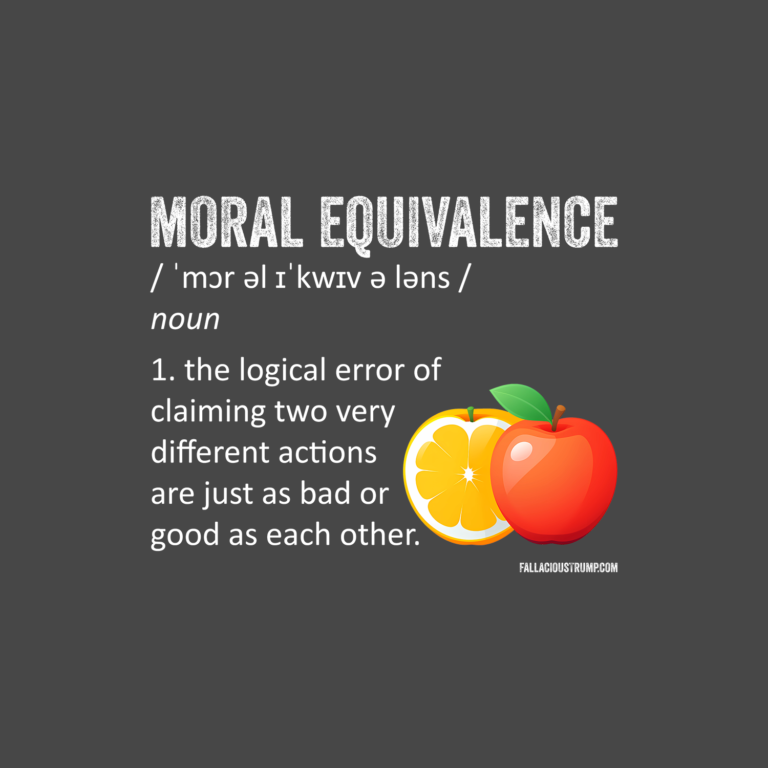
Moral Equivalence (Redux) FT#147
The fallacy of Moral Equivalence is committed when someone argues that because the actions of two people or groups are morally equivalent (whether they are or…
-
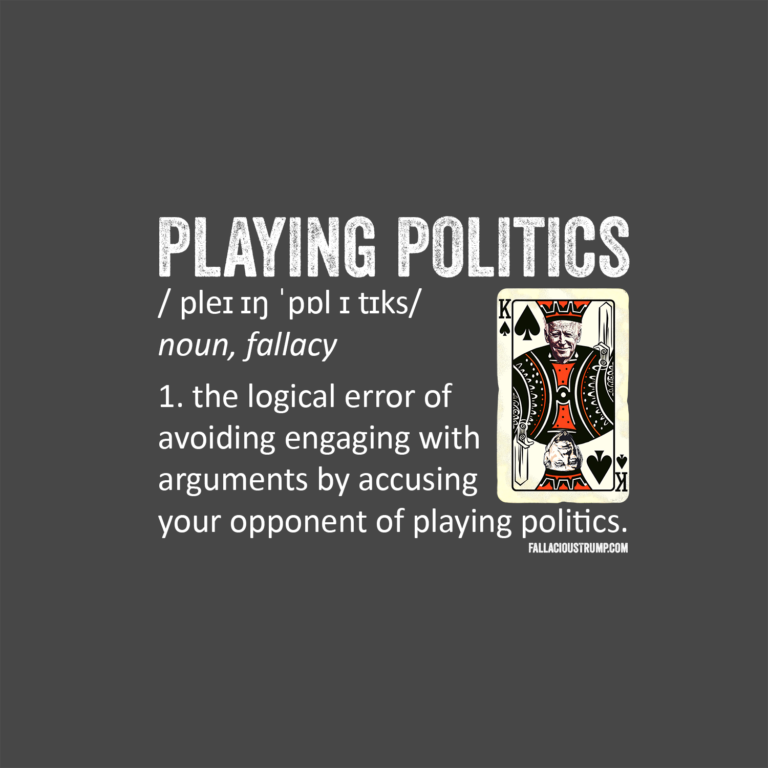
Playing Politics FT#143
The Playing Politics fallacy occurs when someone avoids engaging with an argument by claiming their opponent is merely ‘playing politics’ when in fact they are trying…
-
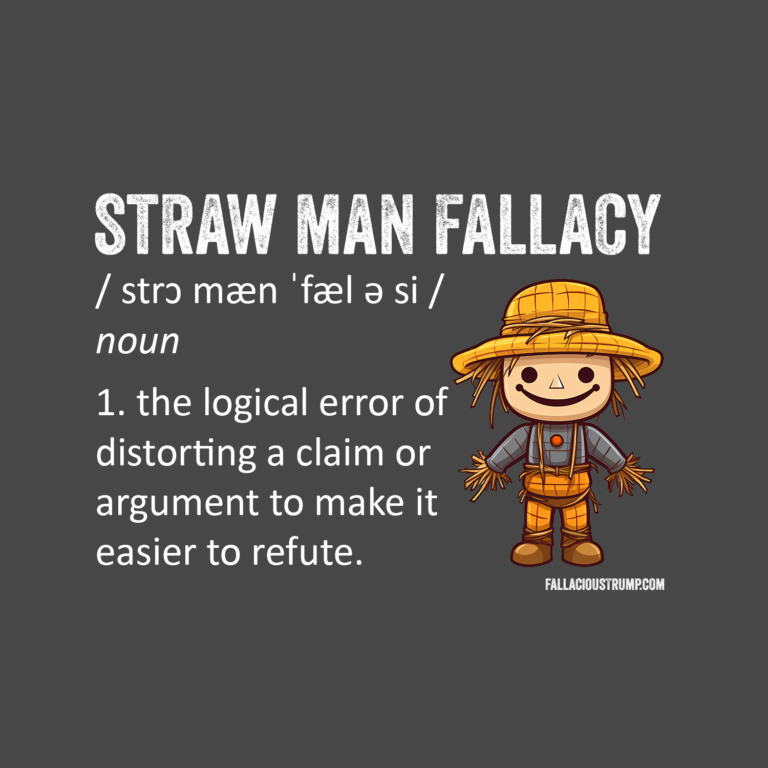
Straw Man (Redux) FT#139
A Straw Man Fallacy occurs when someone distorts or misrepresents their opponents argument to make it easier to defeat.
-

Bulverism FT#138
Bulverism occurs when someone explains why another is wrong without first establishing that they are wrong.
-

Worst Case Scenario FT#135
The Worst Case Scenario Fallacy occurs when someone argues as if the worst case scenario is the probable outcome rather than an unlikely situation.
-

Genetic Fallacy (Redux) FT#130
The Genetic Fallacy is committed when someone believes or dismisses a claim based on its origins rather than on evidence.
-

Zero Sum Fallacy FT#128
The Zero Sum fallacy occurs when someone assumes gains and losses in a specific situation are directly balanced when in fact they are not.
-

Whataboutism FT#127
Whataboutism occurs when someone who is accused of something tries to distract and derail the conversation by talking about something somebody else did, which is implied…
-
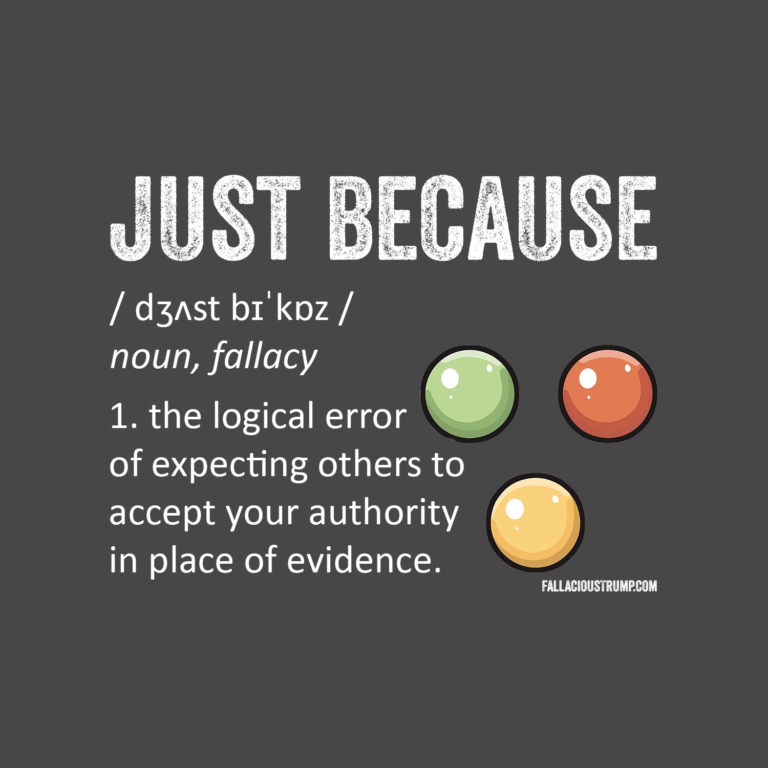
Just Because FT#124
The Just Because Fallacy occurs when someone refuses to give a reason or evidence for their assertion, instead expecting others to trust their authority just because.
-
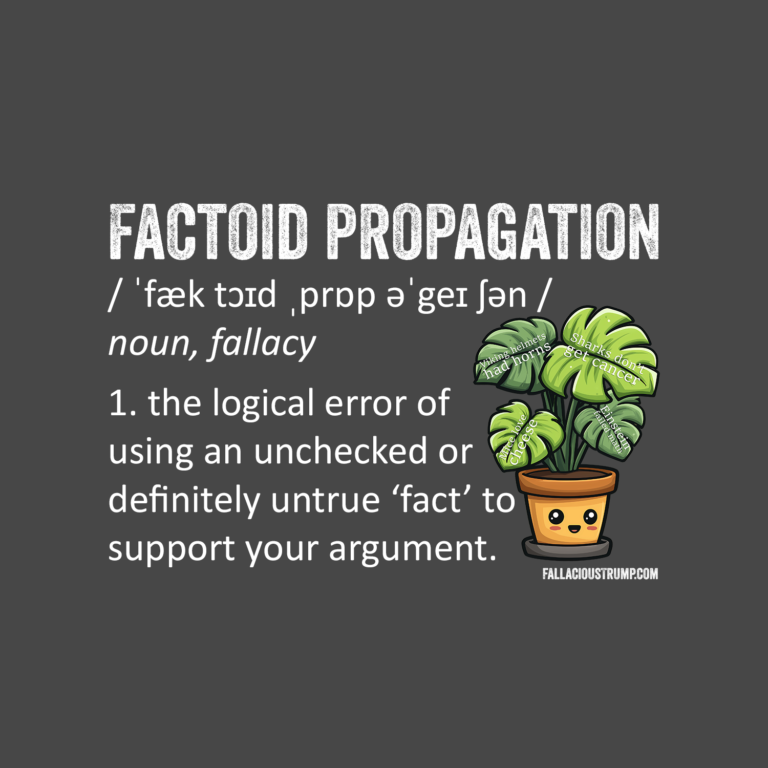
Factoid Propagation FT#122
The fallacy of Factoid Propagation is committed when someone uses a ‘fact’ they heard to support their position, without knowing (or caring) if the fact is…
-
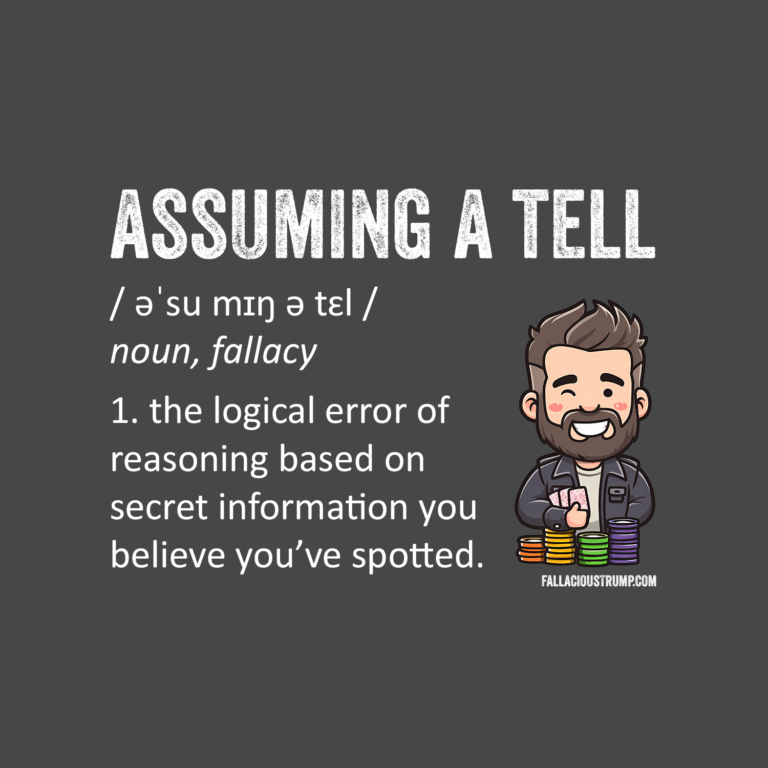
Assuming a Tell FT#121
The Fallacy of Assuming a Tell is committed when someone convinces themselves that they’ve identified a way of spotting secret information and then uses that as…