Logical Fallacies in Friends
Every Fallacious Trump episode featuring Friends, 28 so far. Each one breaks down a logical fallacy with real clips and a plain-English definition. Pick a card to hear the episode.
-
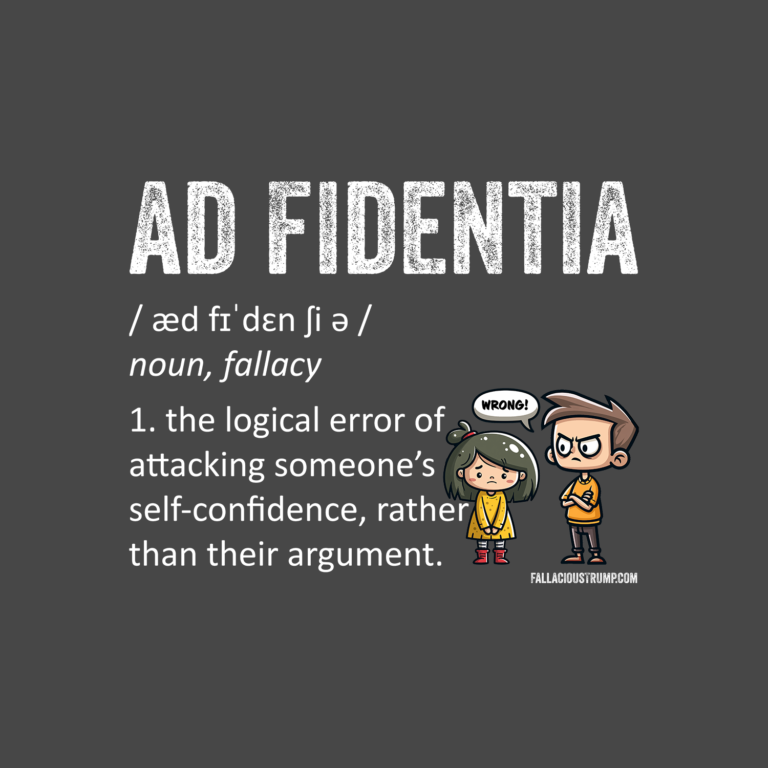
Ad Fidentia FT#204
The Ad Fidentia fallacy occurs when someone attacks their opponent’s self-confidence instead of their argument, and take any doubt expressed as evidence in their favor.
-

Definist Fallacy FT#193
The Definist Fallacy occurs when someone deliberately redefines a term in a way that’s favorable to their own argument (and is probably a stretch of the…
-

Ethnocentric Fallacy FT#179
The Ethnocentric Fallacy occurs when someone starts from an assumption that their own culture is superior to others or was more instrumental in history than it…
-
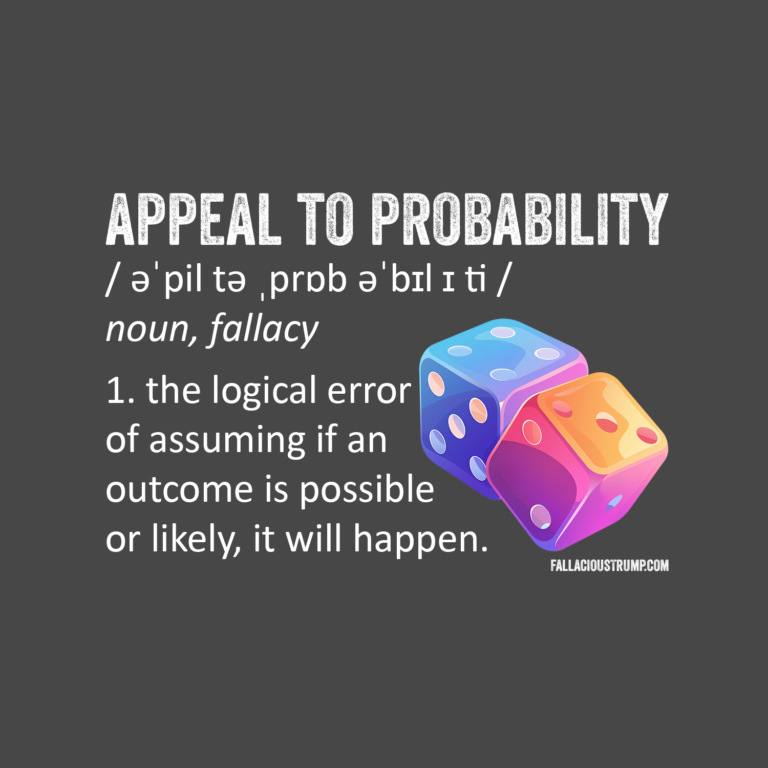
Appeal to Probability FT#163
The Appeal to Probability Fallacy occurs when someone assumes that because something is possible or probable then it will definitely happen.
-

Apophasis FT#148
Apophasis occurs when someone raises a subject by claiming they are not going to mention it.
-

Automation Fallacy FT#140
The Automation Fallacy occurs when people are over reliant on technology for decision making.
-

Bulverism FT#138
Bulverism occurs when someone explains why another is wrong without first establishing that they are wrong.
-

Zero Sum Fallacy FT#128
The Zero Sum fallacy occurs when someone assumes gains and losses in a specific situation are directly balanced when in fact they are not.
-

Whataboutism FT#127
Whataboutism occurs when someone who is accused of something tries to distract and derail the conversation by talking about something somebody else did, which is implied…
-

Tautological Templar FT#125
The Tautological Templar Fallacy involves a person claiming their actions are good or right because they are a good person who only does good things.
-

Argumentum ad Fastidium FT#123
The Argumentum ad Fastidium, or Argument from Disgust, occurs when someone claims that because they find something unpleasant that means it is morally or factually wrong.
-

Iron Man Fallacy FT#120
The Iron Man fallacy is committed when someone misrepresents their own position (or one they agree with) to suggest it is in fact a much stronger…
-

Magical Thinking Fallacy FT#105
The Magical Thinking Fallacy is committed when someone claims that a real world outcome is the result of a magical cause or process, such as a…
-

Subverted Support FT#103
The Subverted Support Fallacy is committed when someone tries to describe or explain a phenomenon without first providing any evidence that the phenomenon exists at all.…
-

False Consensus FT#100
The False Consensus fallacy occurs when someone makes an argument based on their assumption that most other peoples behaviour, beliefs, thoughts and motivations are the same…
-
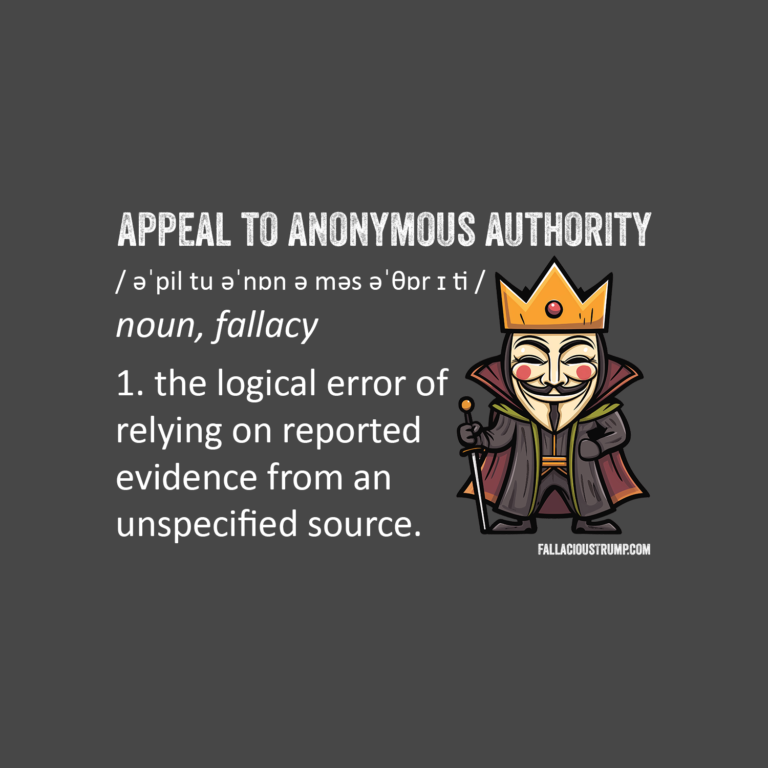
Appeal to Anonymous Authority FT#70
The Appeal to Anonymous Authority is committed when someone cites an authority to back up a claim, but the authority is unnamed, vague or similarly uncheckable.
-
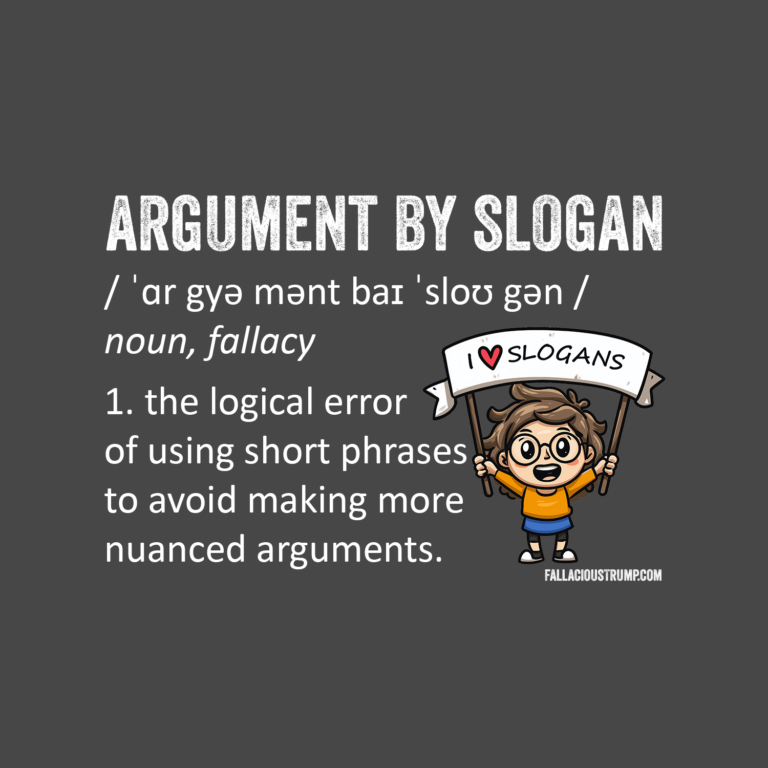
Argument by Slogan FT#59
The Argument by Slogan Fallacy is committed when someone uses a short snappy phrase to avoid making an argument that actually requires some nuance, explanation or…
-

Appeal to Ridicule FT#54
The Appeal to Ridicule occurs when someone mocks their opponents argument instead of making a counter argument, often by taking the argument to an illogical but…
-
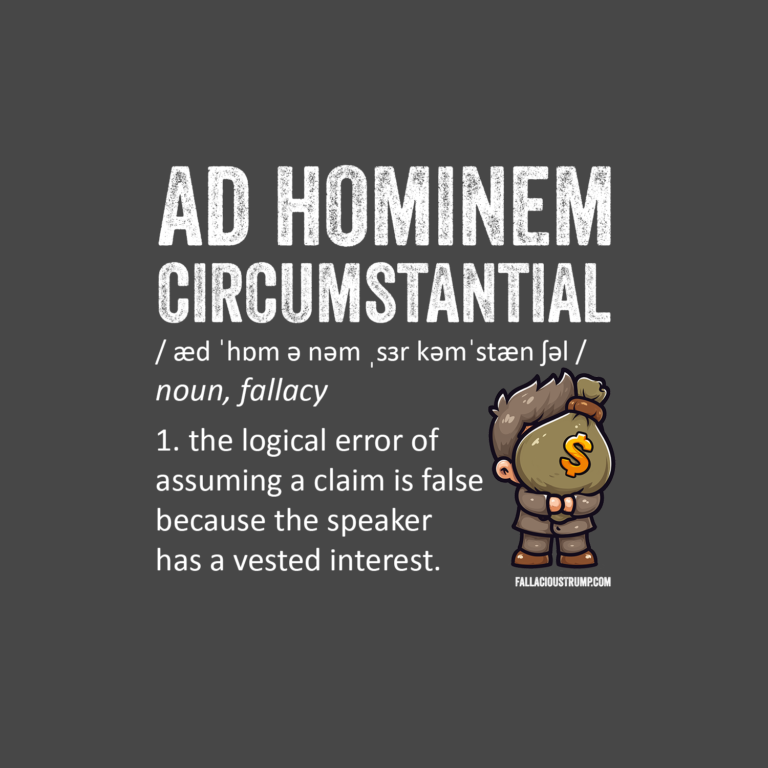
Ad Hominem Circumstantial FT#42
The Ad Hominem Circumstantial Fallacy is committed when, instead of addressing someone’s argument, you question the reason that they are making the argument, often suggesting that…
-
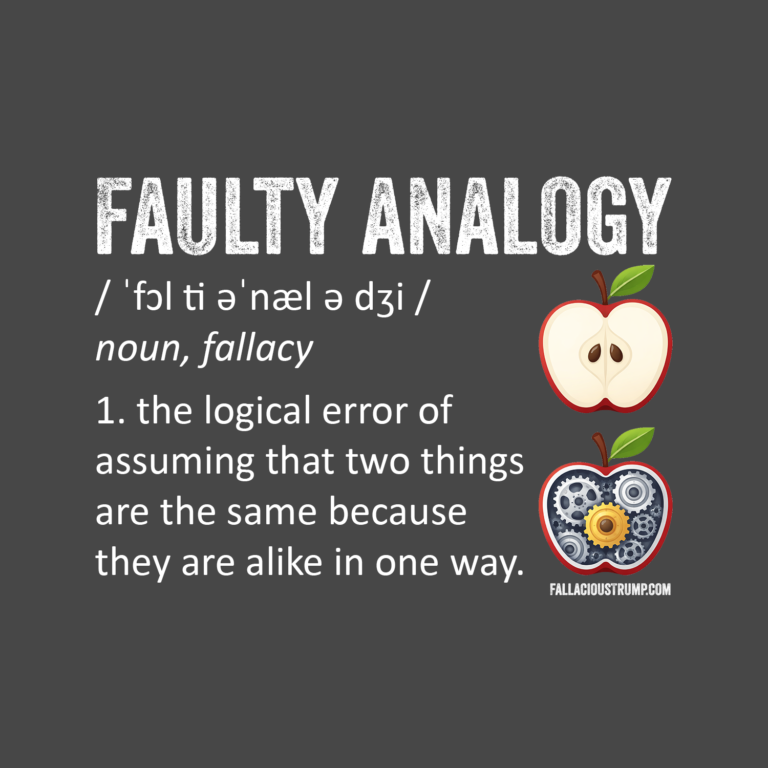
Faulty Analogy FT#41
The fallacy of the Faulty Analogy is committed when you assume that because two things are alike in one way, then they are alike in all…
-
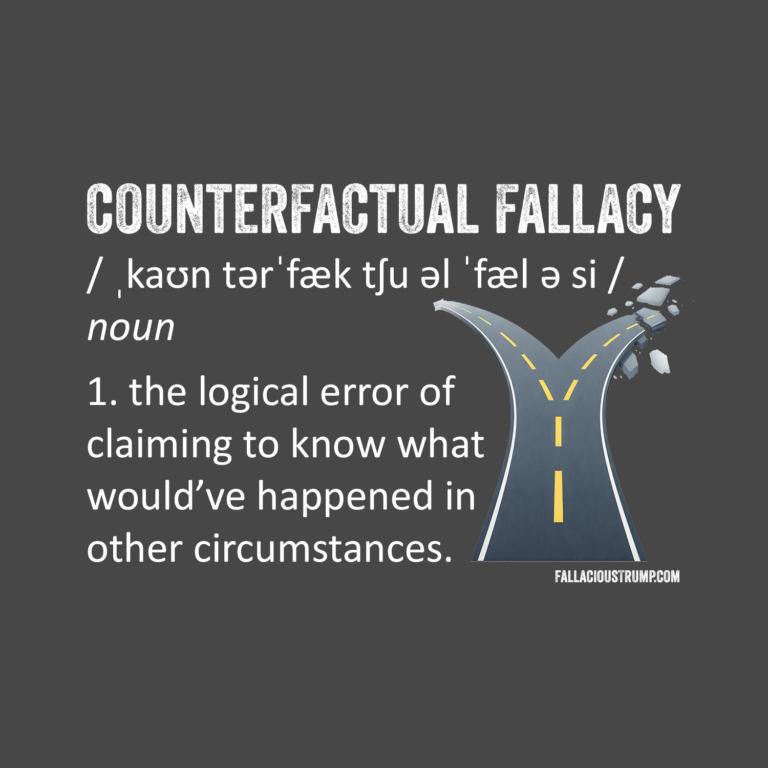
Counterfactual Fallacy FT#37
The Counterfactual fallacy is often committed when someone speculates on the specifics of how things would be different in different circumstances, or in the future if…
-

Single Cause Fallacy FT#27
The Single Cause Fallacy is committed when the speaker assumes a complex outcome to have one cause, thereby making it easier to blame on somebody or…
-

Hasty Generalization FT#14
The fallacy of Hasty Generalization is committed when an assumption is made based on too little information. It may, for example, be that a small sample…
-

Post Hoc Ergo Propter Hoc FT#13
Latin for ‘after this, therefore because of this’, this fallacy is committed when people confuse correlation for causation and assume that because one event followed another,…