Fallacies
-

Argument from Too Much Evidence FT#132
The Argument from Too Much Evidence occurs when someone suggests an imbalance of evidence in one direction is somehow suspicious and therefore proof of the opposite…
-

Countless Counterfeit FT#131
The Countless Counterfeit fallacy is committed when someone suggests a large amount of unreliable evidence, when combined together, can be considered reliable.
-

Genetic Fallacy (Redux) FT#130
The Genetic Fallacy is committed when someone believes or dismisses a claim based on its origins rather than on evidence.
-

Nutpicking FT#129
Nutpicking is the practise of choosing an extreme view or fringe member of a group and representing it as typical of that group to support an…
-

Zero Sum Fallacy FT#128
The Zero Sum fallacy occurs when someone assumes gains and losses in a specific situation are directly balanced when in fact they are not.
-

Whataboutism FT#127
Whataboutism occurs when someone who is accused of something tries to distract and derail the conversation by talking about something somebody else did, which is implied…
-

Accident Fallacy FT#126
The Accident Fallacy is committed when someone applies a general rule to a specific situation which is actually an exception to the rule.
-

Tautological Templar FT#125
The Tautological Templar Fallacy involves a person claiming their actions are good or right because they are a good person who only does good things.
-
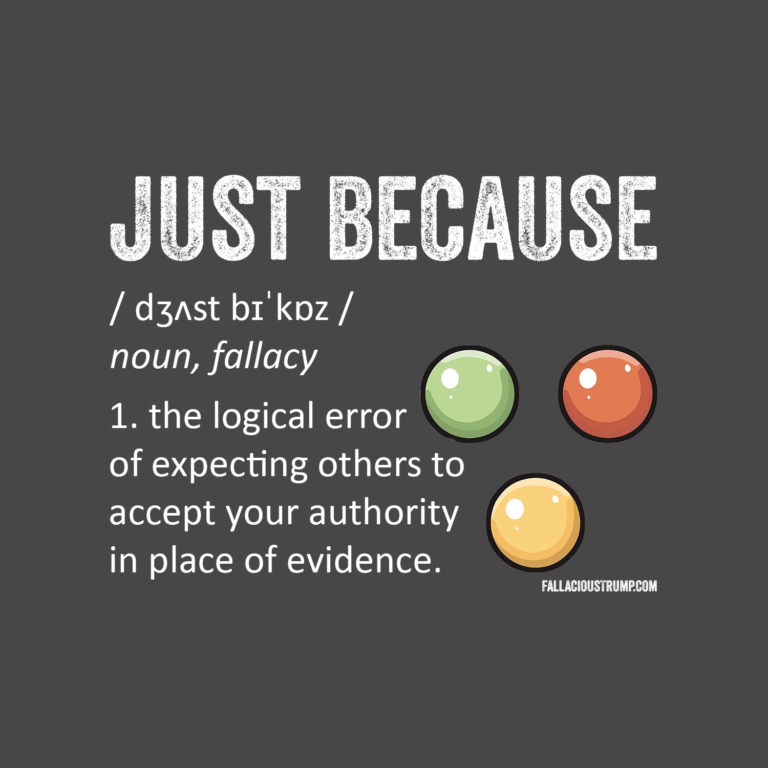
Just Because FT#124
The Just Because Fallacy occurs when someone refuses to give a reason or evidence for their assertion, instead expecting others to trust their authority just because.
-

Argumentum ad Fastidium FT#123
The Argumentum ad Fastidium, or Argument from Disgust, occurs when someone claims that because they find something unpleasant that means it is morally or factually wrong.
-
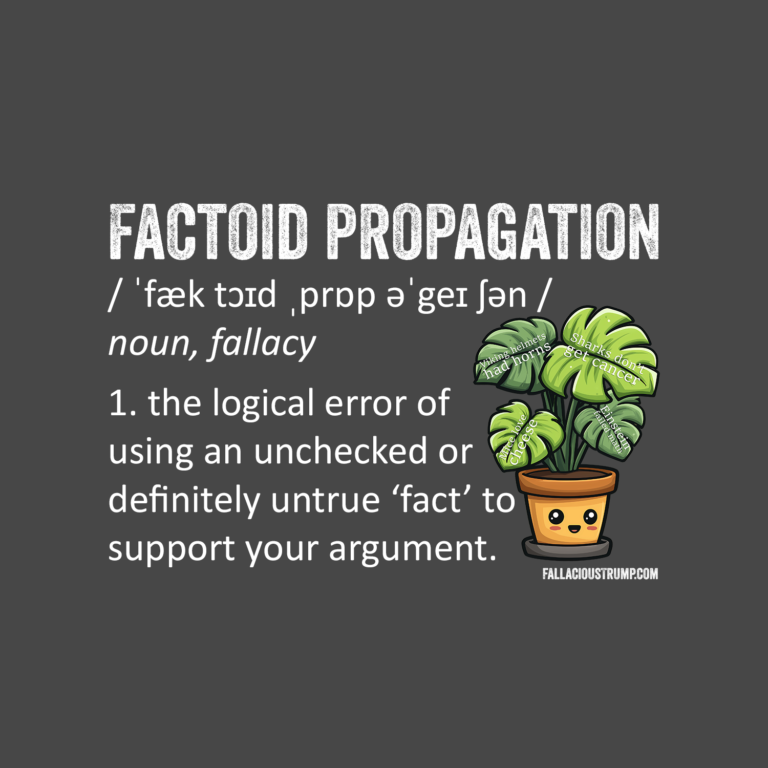
Factoid Propagation FT#122
The fallacy of Factoid Propagation is committed when someone uses a ‘fact’ they heard to support their position, without knowing (or caring) if the fact is…
-
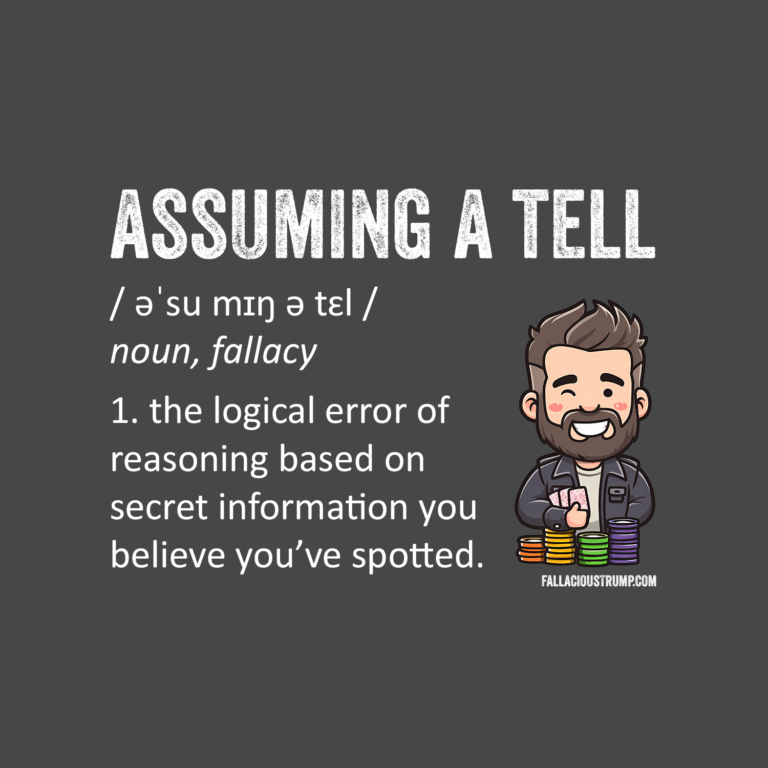
Assuming a Tell FT#121
The Fallacy of Assuming a Tell is committed when someone convinces themselves that they’ve identified a way of spotting secret information and then uses that as…